How to Clean a Toilet Bowl: 10 Ways to Remove Tough Stains
A clean toilet bowl makes the whole bathroom feel fresh and cared for. Even with regular cleaning, hard water deposits, rust, or mineral buildup can leave stubborn stains that don’t budge with just a brush and cleaner.
The good news is you don’t need harsh chemicals or expensive products to get it looking spotless. With a few household items and the right techniques, you can tackle even the toughest stains without scrubbing for hours.
What You'll Need
- Rubber gloves
- Toilet brush
- Baking soda
- White vinegar
- Borax
- Lemon juice
- Pumice stone (toilet-safe)
- Hydrogen peroxide
- Dish soap
- Old toothbrush
- Plastic putty knife (optional)
10 Proven Methods to Remove Tough Toilet Bowl Stains
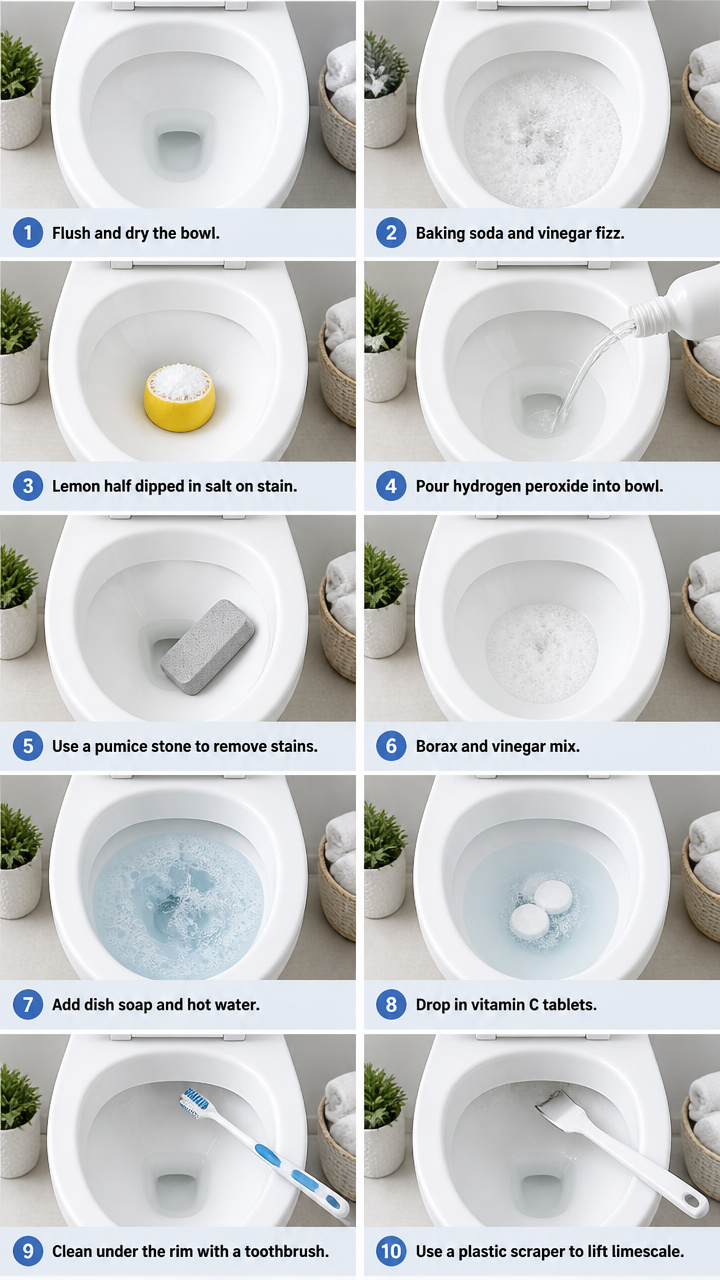
1. Flush and dry the bowl
Start by flushing the toilet to wet the sides and remove loose debris. Then use a dry cloth or paper towel to wipe down the visible rim and upper bowl area so you can see where stains are worst.
This helps your cleaning solution stick to the problem spots instead of washing away too fast.
2. Use baking soda and vinegar
Sprinkle a generous amount of baking soda around the inside of the bowl, focusing on stained areas. Slowly pour white vinegar over it so it fizzes and starts breaking down grime.
Let it sit for at least 20 minutes before scrubbing with a toilet brush.
3. Try lemon and salt
Cut a lemon in half and dip the cut side into coarse salt. Rub it directly onto stains, especially yellow or mineral marks near the waterline.
Leave it for 30 minutes, then scrub and flush. The citric acid lifts stains while the salt adds gentle abrasion.
4. Apply hydrogen peroxide
Pour half a cup of hydrogen peroxide into the bowl, making sure it coats stained areas below the waterline. Let it sit overnight if possible.
The next morning, scrub and flush. It works well on organic stains like mildew or pink rings.
5. Scrub with a pumice stone
Wet a toilet-safe pumice stone and gently rub it over hard water or rust stains. Use light pressure and keep the stone wet to avoid scratching the porcelain.
It’s especially effective on chalky white or brown rings that won’t dissolve with cleaners.
6. Use borax and vinegar
Sprinkle 1/4 cup of borax into the bowl, then add 1 cup of vinegar. Swirl with a brush to mix and let it sit for several hours or overnight.
Borax softens deposits and boosts vinegar’s cleaning power without strong fumes.


7. Add dish soap and hot water
Squirt a few drops of dish soap around the bowl, then pour in a pot of hot (not boiling) water from waist height to help it swirl. Let it sit 10 minutes.
This loosens grease and film, making it easier to scrub away smudges and residue.
8. Tackle rust with vitamin C
Drop 3-4 crushed vitamin C tablets into the bowl and let them fizz. Leave for an hour, then scrub the stains.
Ascorbic acid breaks down iron in rust stains naturally and safely.
9. Clean under the rim with a toothbrush
Dip an old toothbrush in vinegar or cleaner and reach under the toilet rim where jets are hidden. These small holes collect gunk and cause odors.
Scrub each opening carefully, then flush to clear out loosened debris.
10. Remove stubborn buildup with a plastic scraper
For thick limescale or crusty rings, gently slide a plastic putty knife under the deposit and lift it off. Be careful not to gouge the porcelain.
Follow up with vinegar to dissolve any remaining residue.
Pro Tips for Better Results
- Always wear gloves to protect your hands from germs and cleaning agents.
- Ventilate the bathroom by opening a window or turning on the fan.
- Avoid mixing bleach with vinegar or ammonia—it creates dangerous fumes.
- Clean the bowl weekly to prevent stains from setting in.
- Store a small bottle of vinegar and a scrub brush under the sink for quick touch-ups.

You’ve got everything you need to bring your toilet back to life using simple, safe methods. With a little patience and the right approach, tough stains don’t stand a chance. Now go enjoy that sparkling clean bowl.