35 Lovely Summer Wreath Ideas for Your Front Door
Summer has a way of making the front door feel like the first sentence of a good story — and right now, wreaths are doing a lot of the talking. Botanical textures, sun-washed florals, and everyday greenery are showing up everywhere from farmhouse porches to city townhomes.
A seasonal wreath works harder than most decorations. It shifts the entire feeling of a space with minimal effort and even less commitment.
Here you’ll find 35 ideas spanning sunflowers, citrus accents, leafy greens, and soft florals — pulled from real homes styled across different door colors, interior spaces, and outdoor settings.
Trending on Amazon



1 White Spring Door Wreath
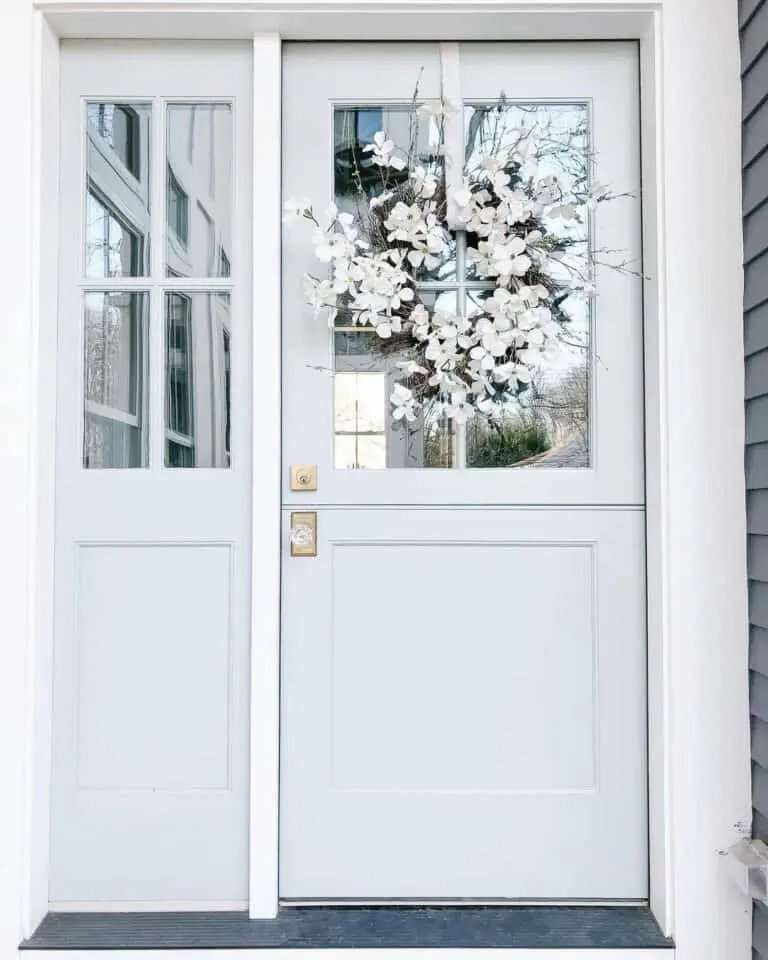


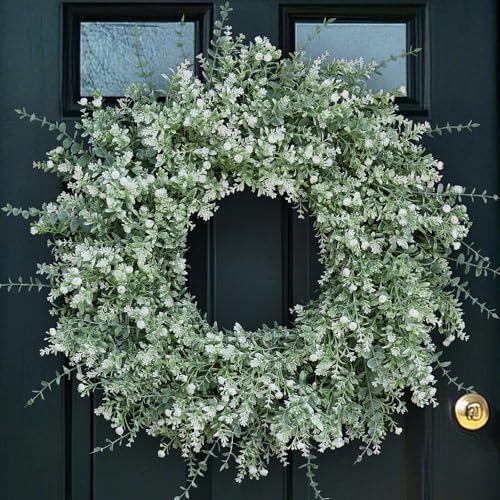
White flowers against a light gray door create a soft, airy contrast that feels fresh without being loud. Brass and crystal hardware adds just enough warmth to keep the palette from feeling cold or flat.
A wreath made from white blooms — think ranunculus, cosmos, or faux white hydrangeas — suits this kind of entry because the neutral tones let the texture do the talking. Layering different flower shapes and sizes adds visual depth that a single bloom type simply can’t deliver.
2 Floral Wreath, Gray Door
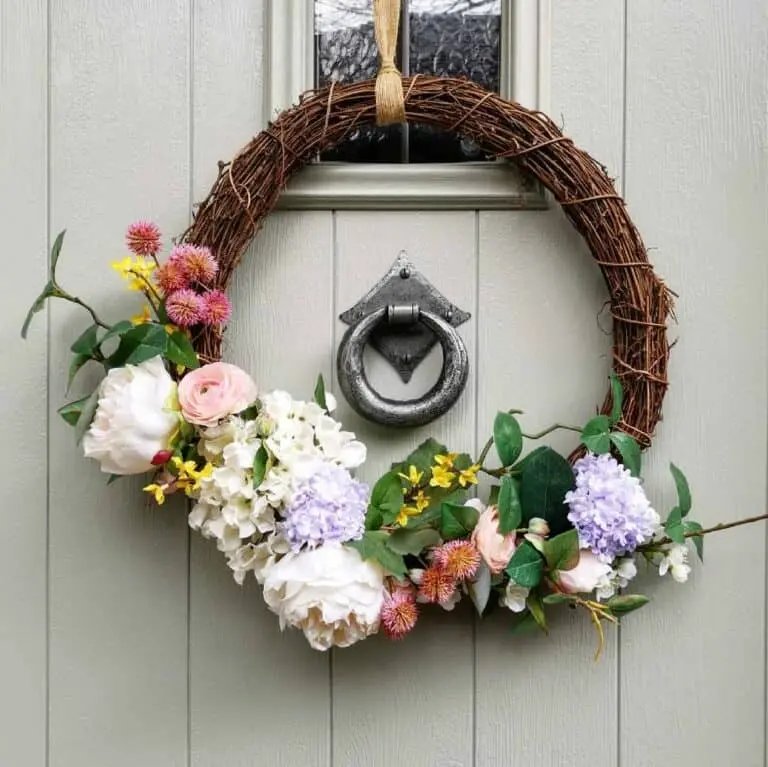


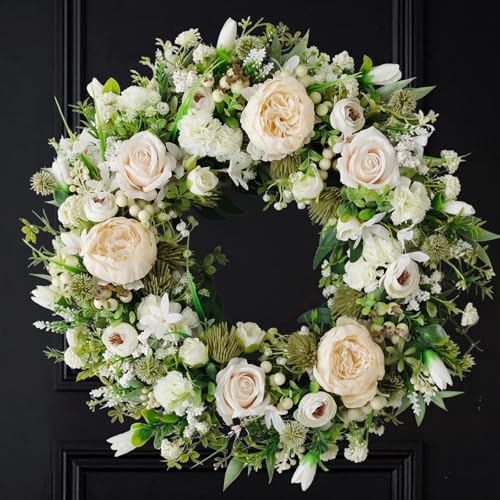
White, purple, and pink blooms layered together give this wreath a soft, summery feel without leaning too sweet or overdone. Against the gray vertical paneling, those cool tones get a natural contrast that lets the colors breathe.
Gray doors can sometimes feel flat, but a wreath with warm pink accents pulls the whole entry together. The steel door knocker and small glass window keep the look grounded, so the florals add life rather than compete with the architecture.
3 Green Wreaths, White Door
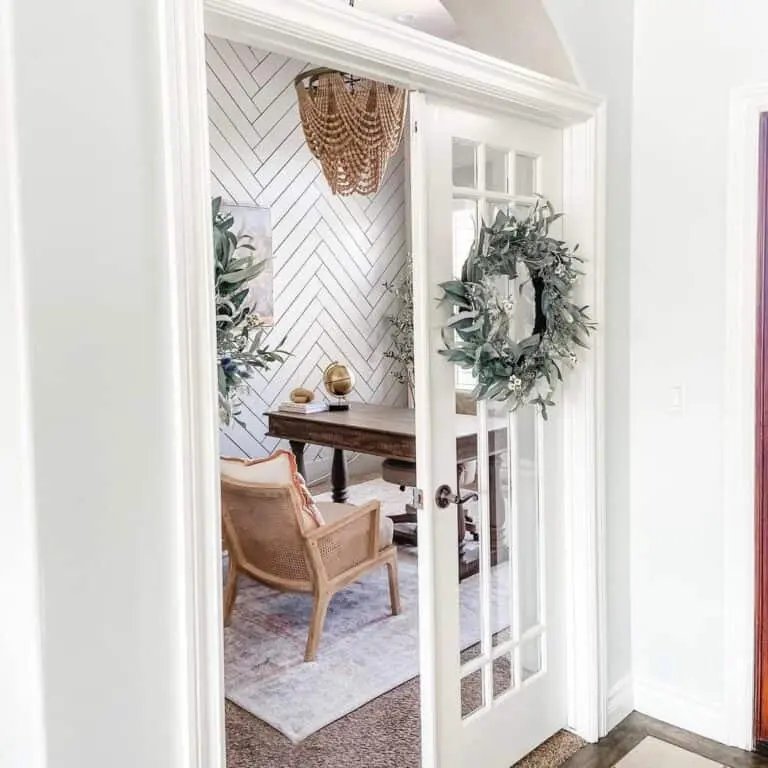


Green wreaths with white flowers against a white door create a clean, layered look — the contrast keeps both elements visible instead of blending together.
This home office pulls the outdoor freshness indoors without overwhelming the space. The herringbone shiplap wall behind the desk already adds texture, so keeping the wreath simple with just two tones prevents visual clutter.
That tan beaded chandelier ties the natural elements together, bridging the wood desk and the greenery on the door. Repetition of organic materials — wood, beads, botanicals — gives the room a cohesive feel without matching everything exactly.
4 Green Door Wreath
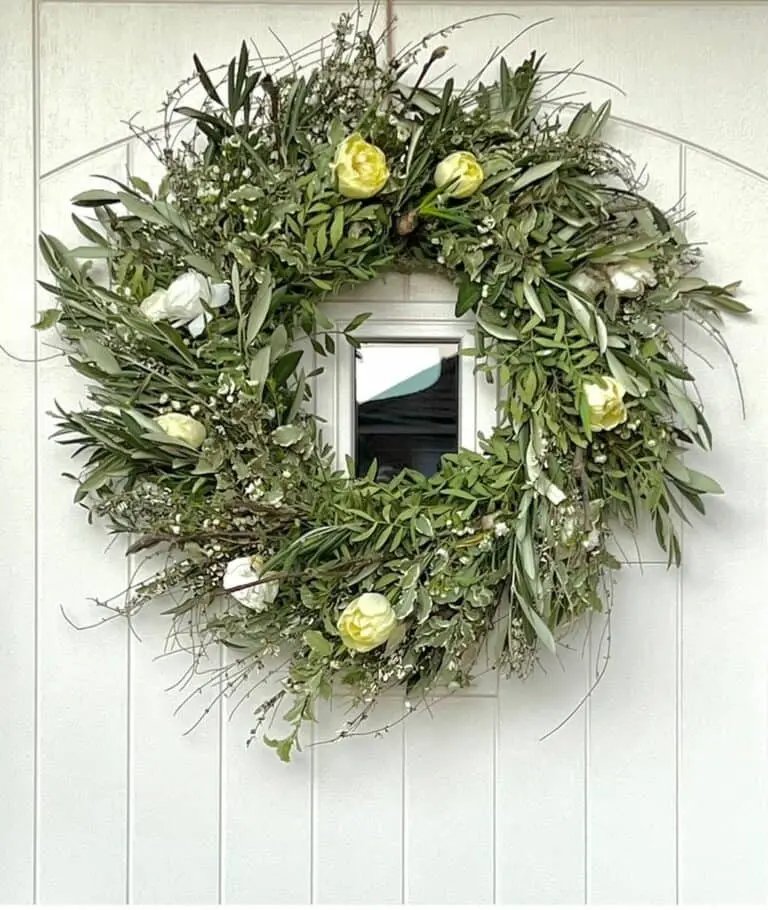

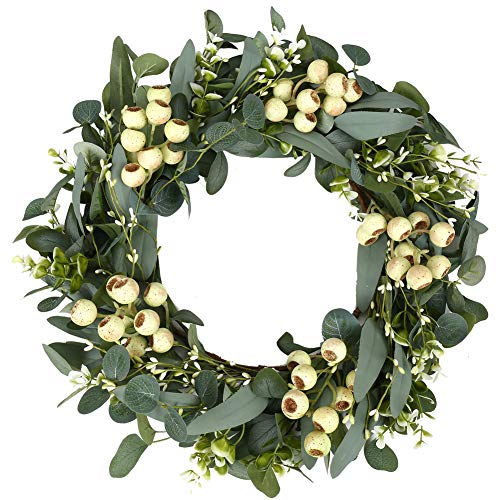
Yellow and white blooms against a deep green base give this wreath a fresh, summery contrast that reads clearly from the street. Smaller white flowers tucked between the larger yellow ones add depth without crowding the design.
Mounting it on a white shiplap door with a small glass window lets the green really pop — the light wood texture frames the wreath naturally. Green on white keeps the palette simple, so the flowers do all the visual work without competing with other elements on the door.
5 Small Green Wreath
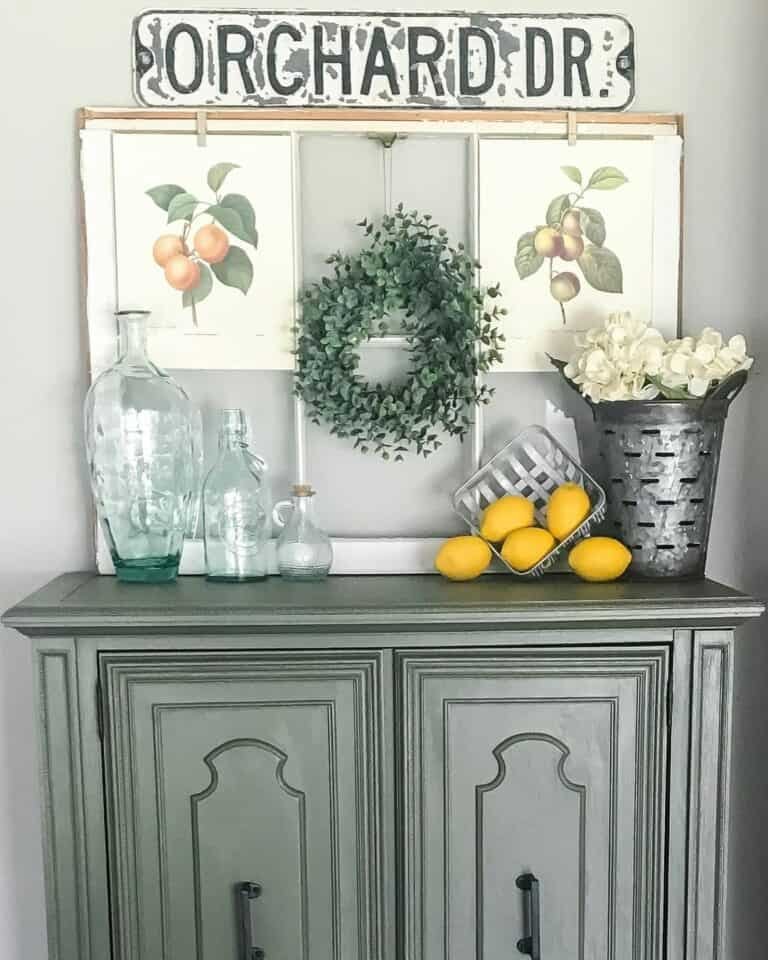


A small green wreath hung on a rustic white window frame brings an unexpected focal point to this sideboard vignette without competing with the surrounding decor. The weathered white frame acts as a natural border, making even a modest wreath feel intentional.
Muted greens tie everything together here — the wreath echoes the tones of the green glass vases and galvanized metal below, so the eye moves fluidly across the arrangement. Keeping the wreath small, roughly 8-10 inches, lets the layered styling beneath it breathe rather than getting lost under something oversized.
6 White Barn Door Wreath
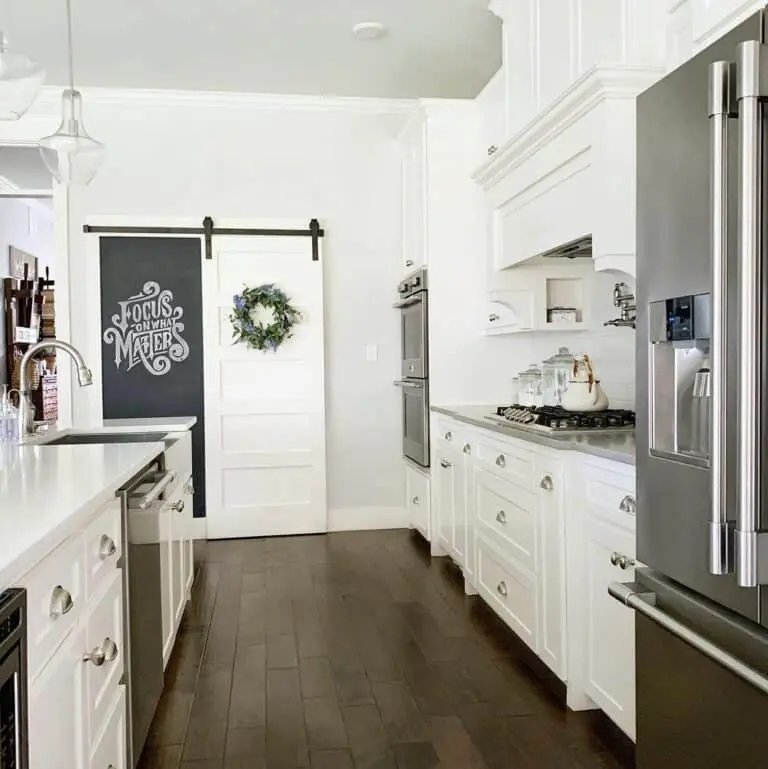


A green wreath against a white barn door creates a sharp contrast that draws the eye without competing with the surrounding kitchen elements. The cool gray countertops and stainless steel appliances let the door become its own quiet focal point.
Keeping the wreath simple — think lush eucalyptus or a loose foliage ring — suits the clean lines of white shaker cabinetry far better than something overly ornate. Summer greenery stays fresh-looking against white because the colors sit on opposite ends of the spectrum, giving each other room to breathe.
7 White Floral Front Door
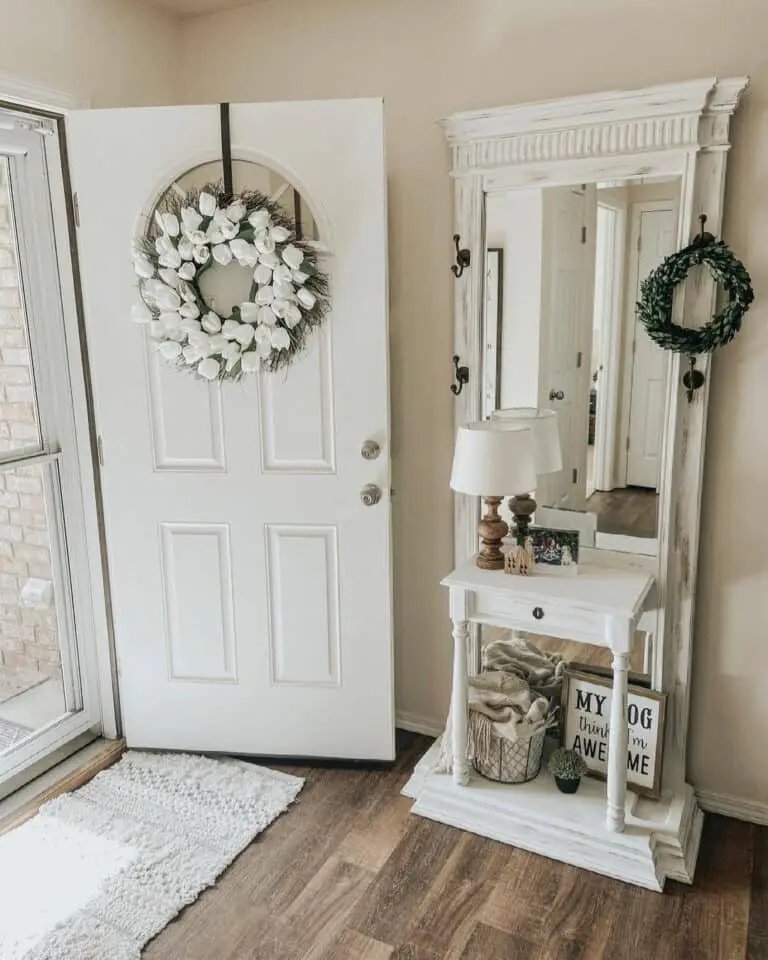

White-on-white layering sounds risky, but this entryway pulls it off by mixing textures — a soft floral wreath against a painted wood door, a weathered mirror frame beside a smooth side table.
The wreath’s full, rounded silhouette suits a door with a window pane because it frames the glass rather than competing with it. Keeping the flowers white rather than colorful lets the farmhouse accessories carry the visual interest. That restraint is what ties the whole vignette together without any single element feeling out of place.
8 Sage Kitchen Wreath
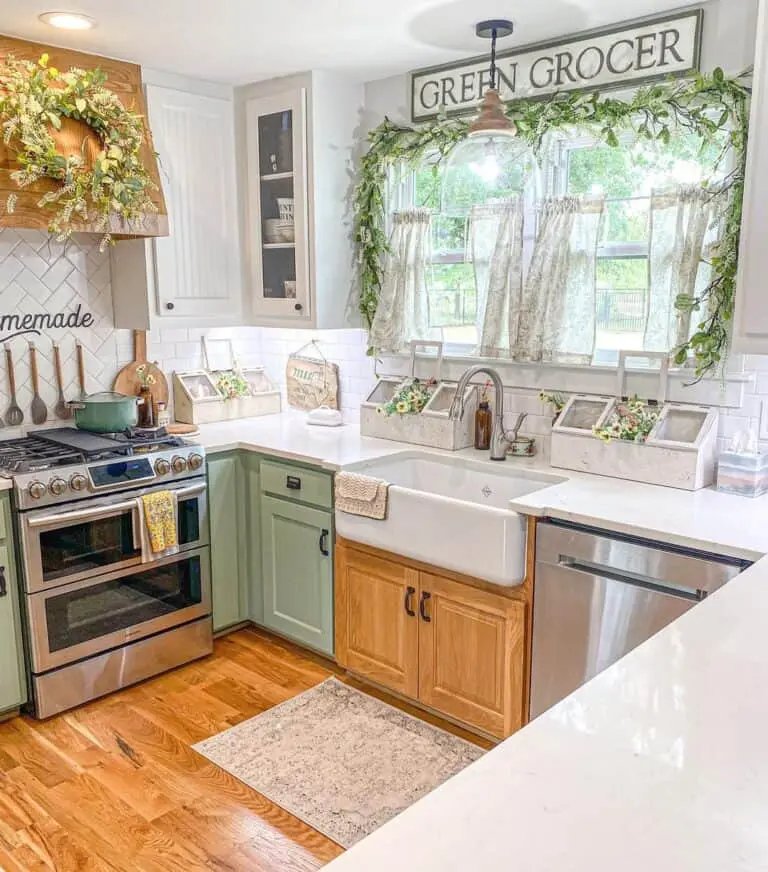

Sage green and natural wood make a quietly cohesive combination in a farmhouse kitchen, where a simple herb-inspired wreath ties the whole space together. Dried sage bundles, eucalyptus sprigs, or even faux greenery in muted olive tones suit this palette without competing with the cabinetry.
Hanging the wreath near a window or above curtains frames the natural light beautifully. The soft, dusty green tones add depth to neutral countertops and wooden accents without overwhelming the room’s calm, earthy feel.
9 Farmhouse Porch Wreaths
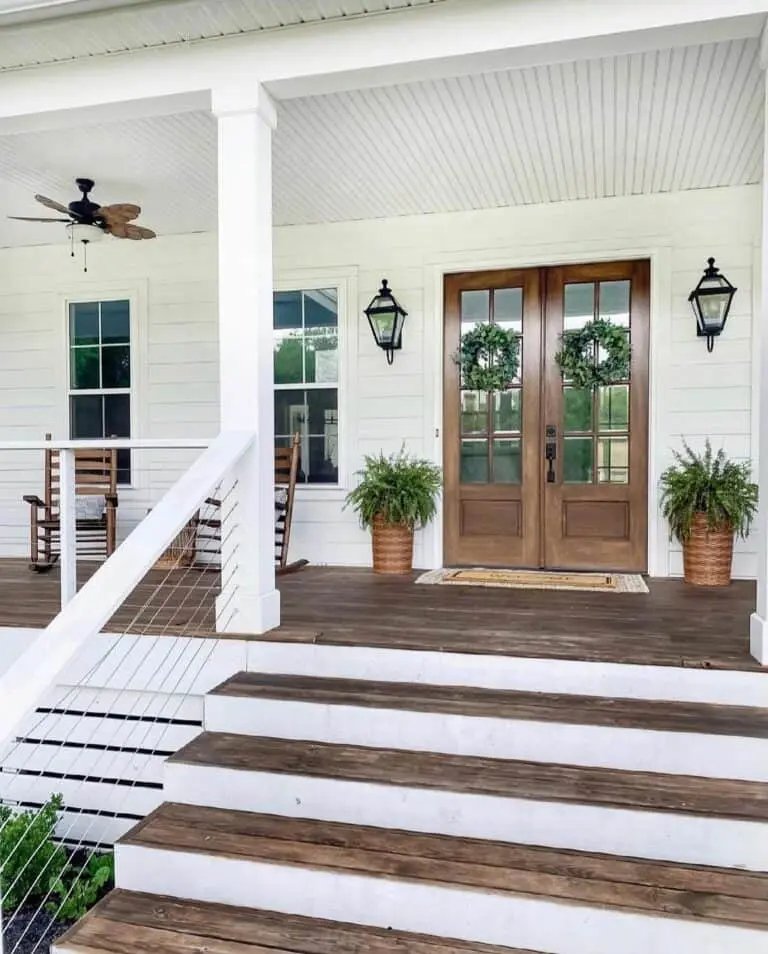


Simple green wreaths against white columns and black sconce hardware keep the palette tight — that contrast does a lot of the visual heavy lifting here. Matching wreaths on both sides of the door gives the porch a grounded, symmetrical feel without looking overly formal.
Woven planters and wood rocking chairs add enough organic texture that the wreaths don’t need to be elaborate. A basic eucalyptus or boxwood wreath in a 24-inch size suits this style far better than anything fussy or flower-heavy.
10 Orange Floral Wreath
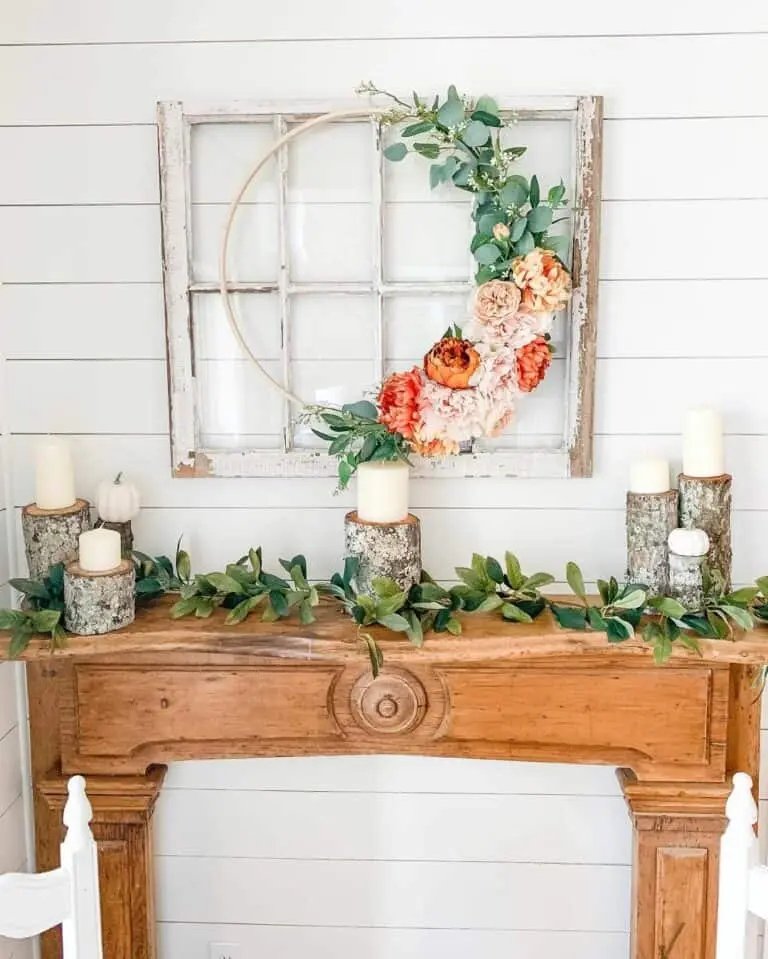
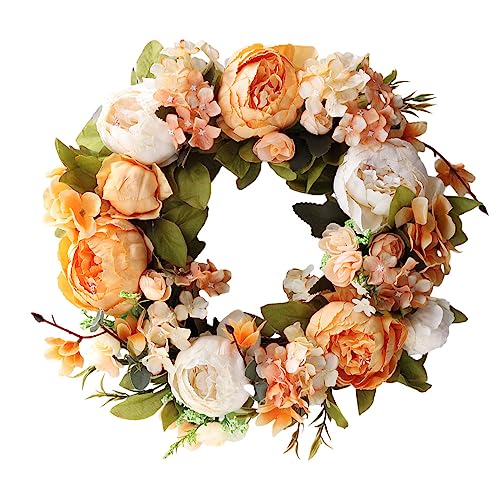


Orange blooms against a white shiplap wall create a warm, lived-in contrast that feels intentional rather than overdone. Pairing a wreath with rustic architectural details — like this antique wood mantel — grounds the seasonal color without letting it feel too bold.
The white window frame acts as a natural border, drawing your eye straight to the wreath’s warm tones. Deep burnt orange sits beautifully against distressed or neutral finishes because both textures share that same unhurried, vintage quality.
Hanging wreaths on interior window frames is an underused decorating move that adds depth and layering to a wall display.
11 Green Leaf Wreath
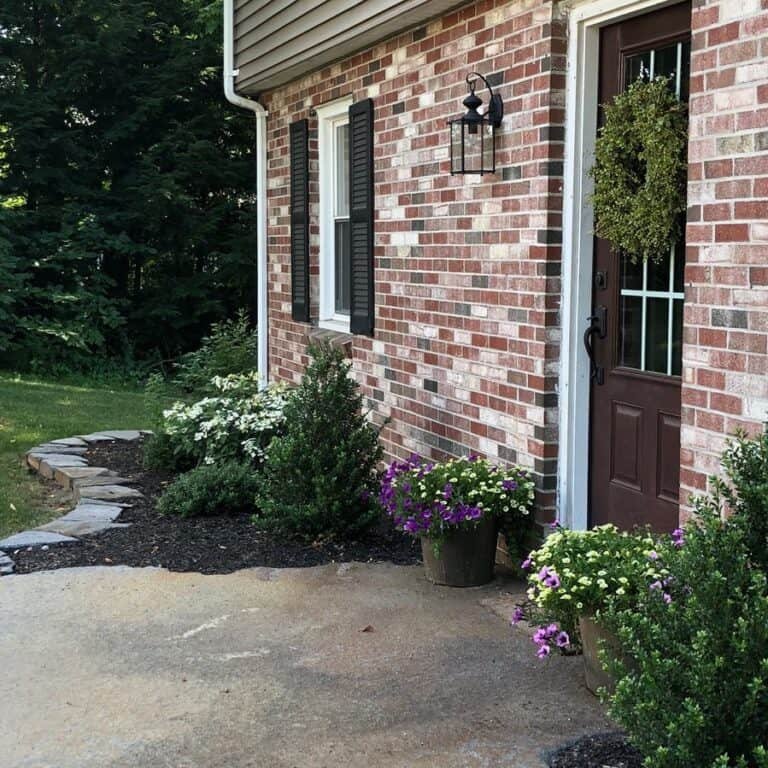


A simple wreath made of fresh or faux eucalyptus and mixed greens suits a brown door far better than a floral option — the cool green tones soften the warmth of dark wood without competing with it. Keeping it monochromatic in texture and color lets the natural materials do the heavy lifting.
Pair it with black lantern sconces on either side, and the contrast between dark metal and lush greenery gives the entryway real visual weight. Flanking the door with low planted greenery ties everything together, grounding the wreath so it feels intentional rather than an afterthought.
12 Wood Peg Rack Wreath
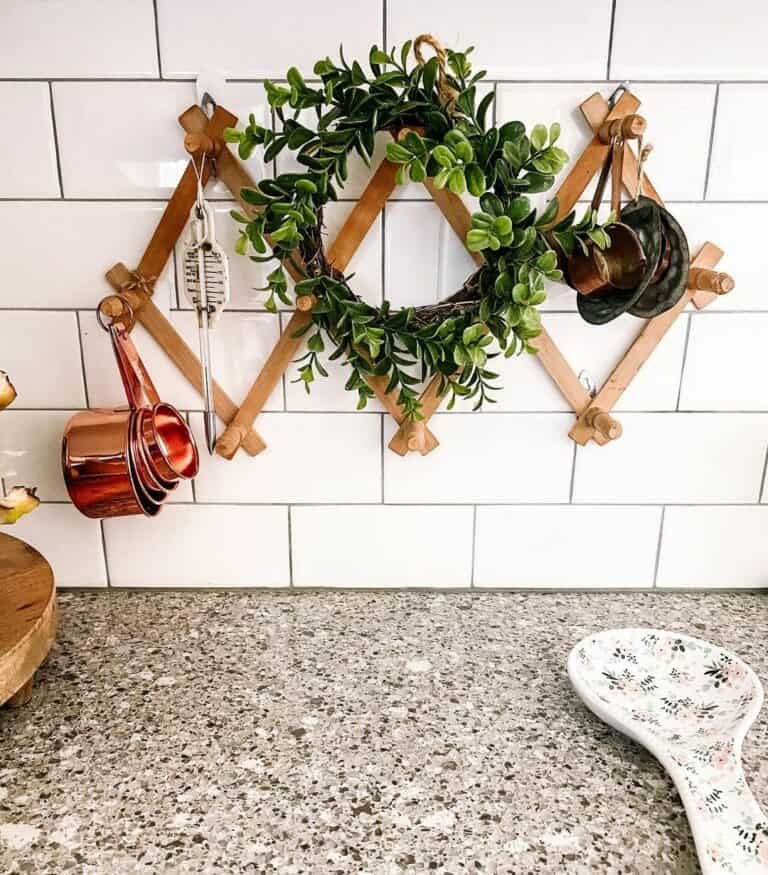


Hanging a small wreath on a wood peg rack keeps it off the door entirely and tucks it into everyday spaces like a kitchen. The dark stained accordion-style rack against white subway tile gives the wreath a natural, grounded backdrop that lets even a simple green ring read as intentional decor.
Compact wreaths around 8–10 inches fit a single peg without crowding the surrounding hooks. This approach also keeps the rack functional — you can still hang dish towels or utensils on the other pegs without the wreath getting in the way.
13 White Floral Door Wreath
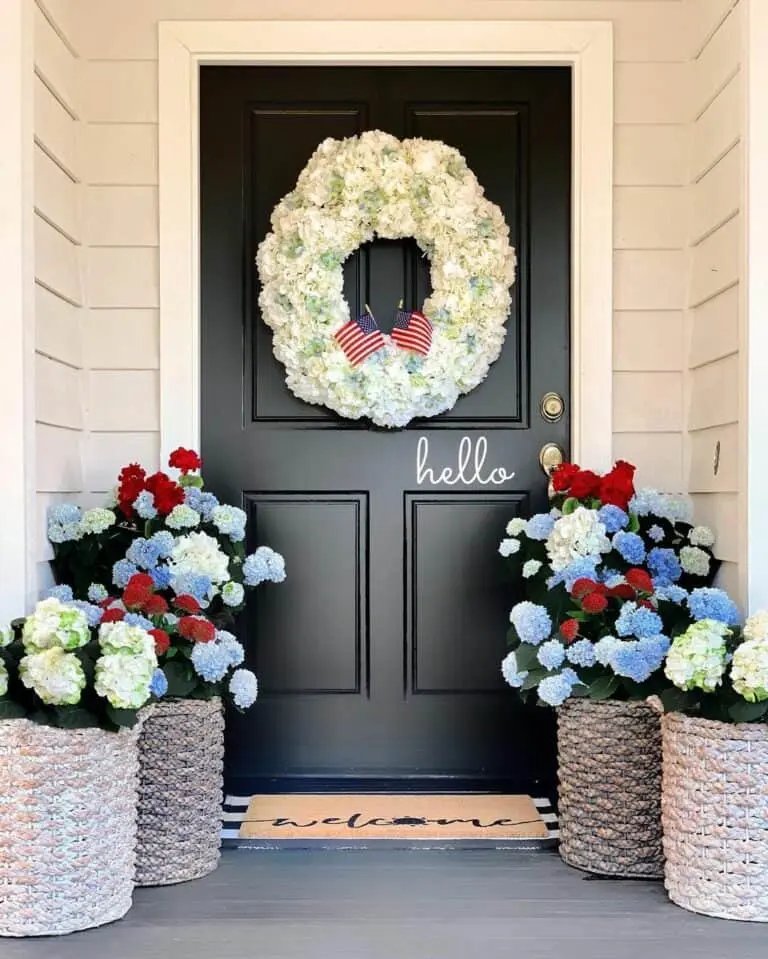


White florals paired with American flags make a natural combination for summer — the clean, bright blooms let the red, white, and blue colors pop without competing. Mounting the wreath on a black door gives that contrast extra impact.
The woven planters flanking the entrance tie everything together, adding texture and repeating the patriotic color palette at ground level. This layered approach — wreath above, planters below — frames the doorway like a complete vignette rather than a single decorative piece.
14 Pink Flower Door Wreath
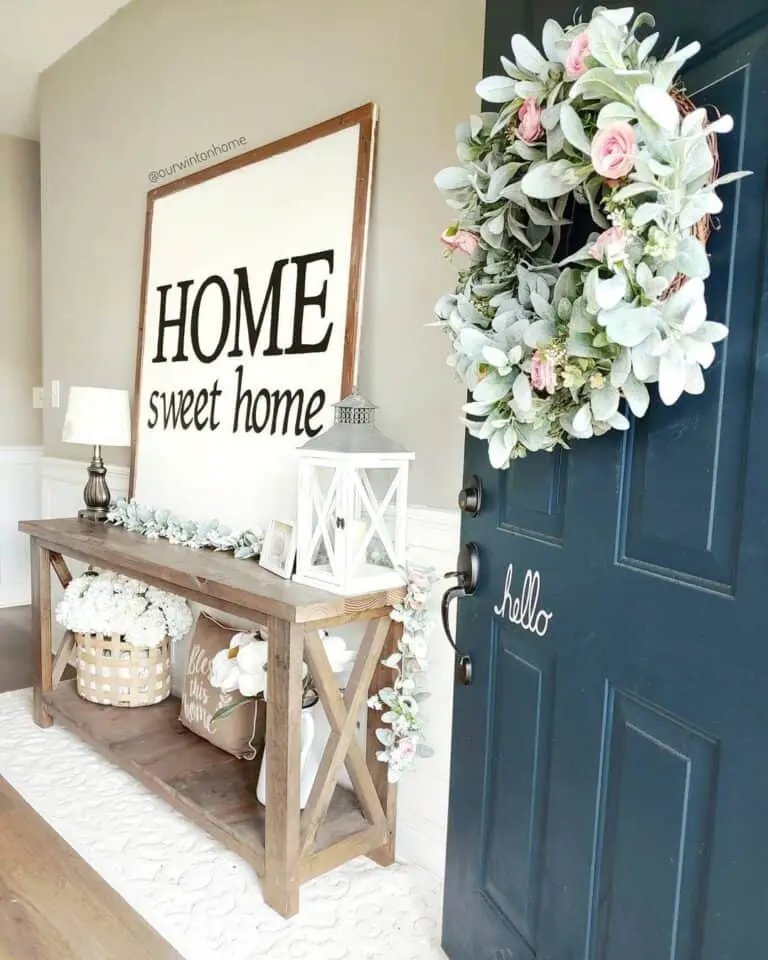


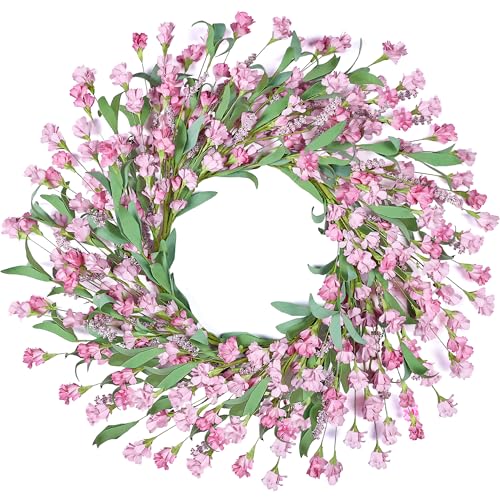
Green foliage mixed with soft pink blooms gives this wreath a fresh, garden-picked feel that suits a dark navy or charcoal door particularly well — the contrast makes the colors pop without any extra effort.
Keeping the surrounding decor neutral, like the white and tan pieces on the console table here, lets the wreath carry all the visual interest. A simple hook or over-the-door hanger keeps the hardware invisible so nothing distracts from the design itself.
This style bridges the gap between casual and polished, making it a solid choice for a front entry that gets daily foot traffic.
15 White Hutch Wreath
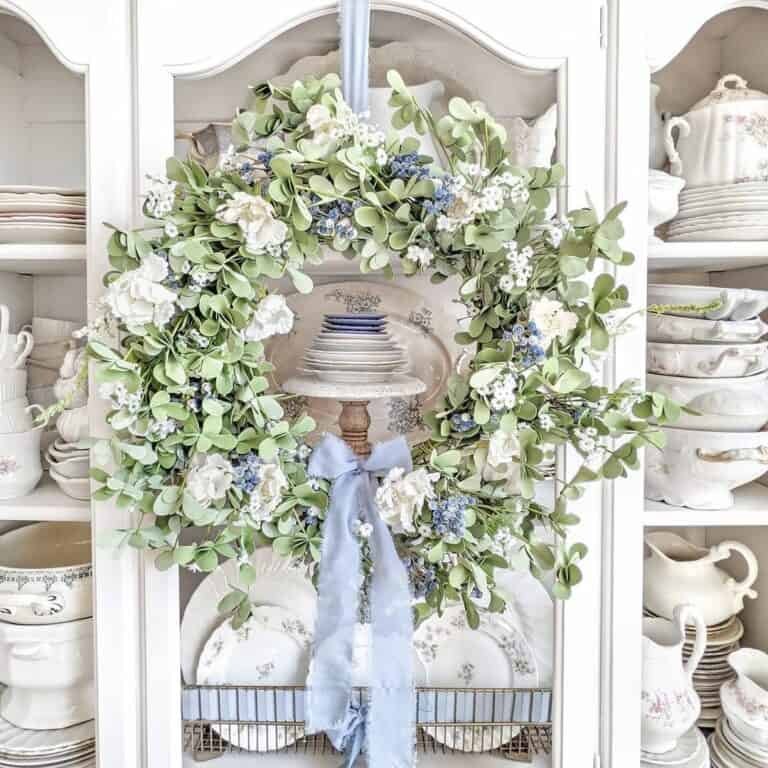



Hanging a wreath on a hutch with glass-front doors gives you a layered, collected look — the white china visible behind the glass adds depth that a blank wall never could. Periwinkle pairs naturally with white because the cool blue tone keeps things feeling fresh rather than stark.
A full bow in the same periwinkle shade ties the color story together without introducing anything new. That kind of repetition — using one accent color twice — gives the arrangement a pulled-together feel that reads as intentional rather than accidental.
16 Light Wood Shiplap Doors
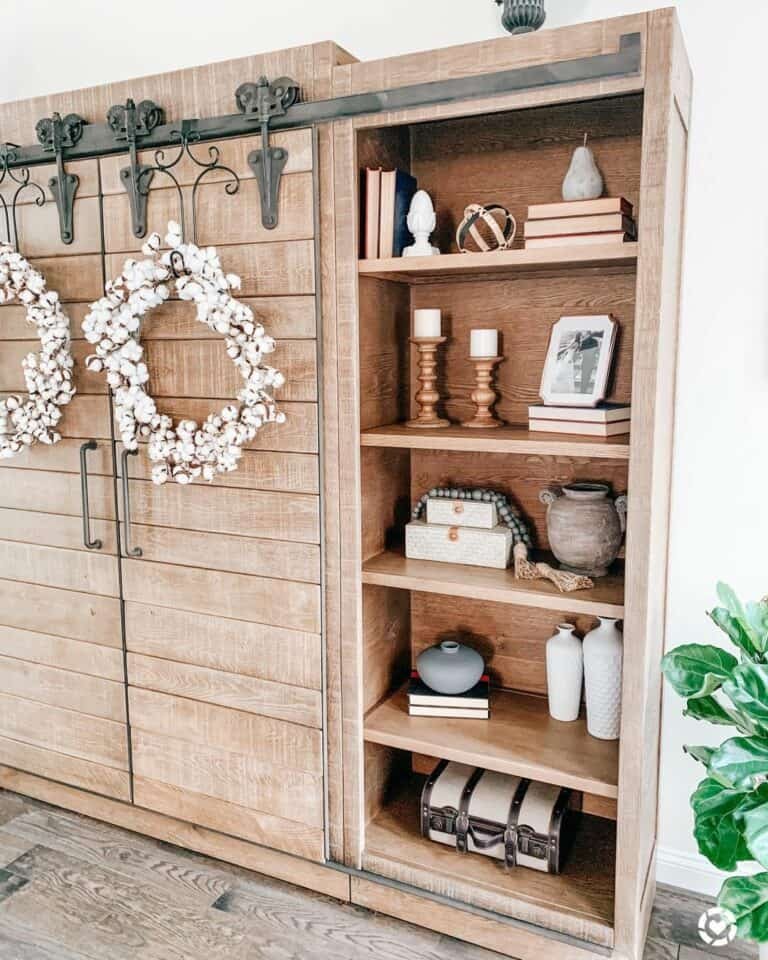

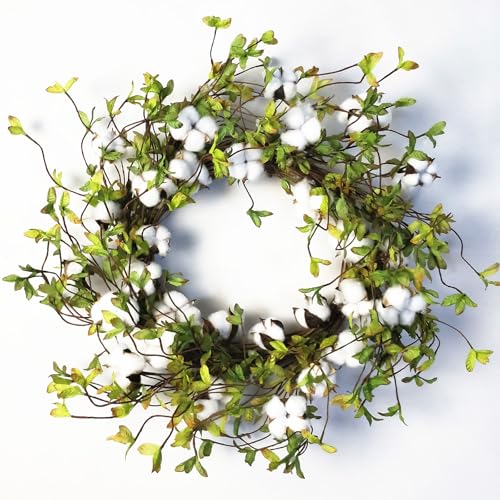

White cotton wreaths suit the raw, natural texture of horizontal shiplap doors because the soft material echoes the grain without competing with it. Hanging one centered on each sliding panel keeps the arrangement symmetrical and intentional.
The antique black metal track hardware adds contrast that makes the light wood pop, so keeping the wreaths simple and undyed lets the natural materials do the heavy lifting. Thick cotton rope or looped fabric wreaths around 18–20 inches diameter fill the door panels proportionally without looking sparse.
17 Wood Doors, Green Wreaths
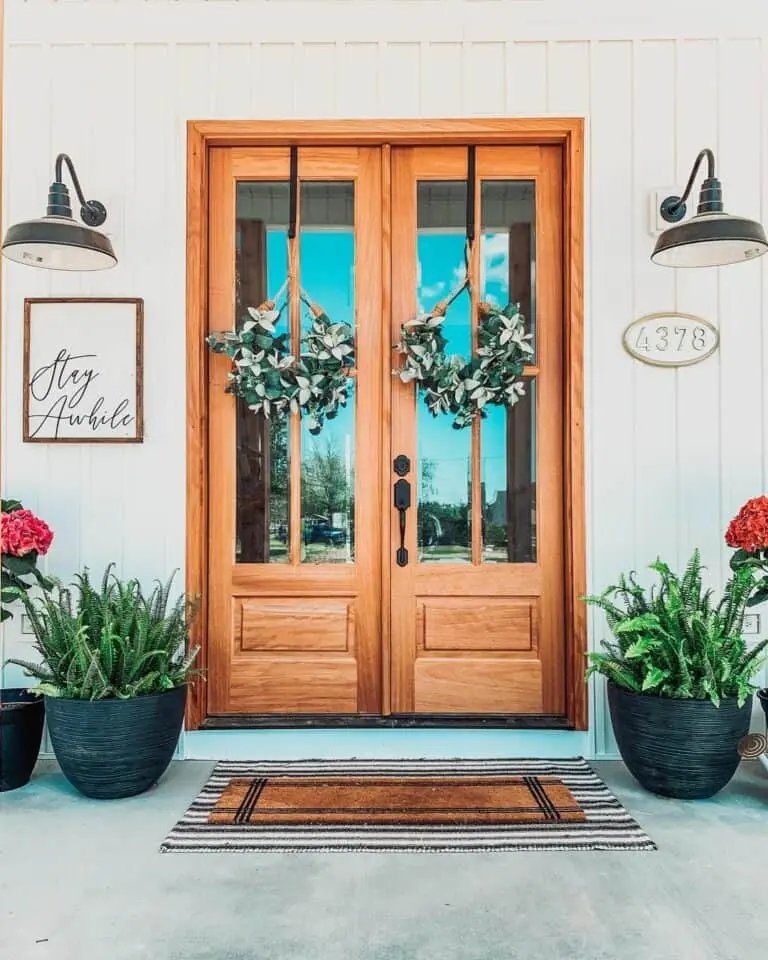


Pairing two matching green wreaths on double stained wood doors gives the entrance a grounded, natural feel — the warm wood tones and deep green complement each other without competing. This setup leans into texture contrast, rough wood grain against soft, leafy foliage.
Black planters and black wall lamps anchor the look by repeating the same accent color throughout the space. That kind of repetition pulls everything together visually, so the greenery feels intentional rather than random. Simple, cohesive choices like these tend to make a bigger impression than complicated arrangements ever do.
18 White Flower Mirror Wreath
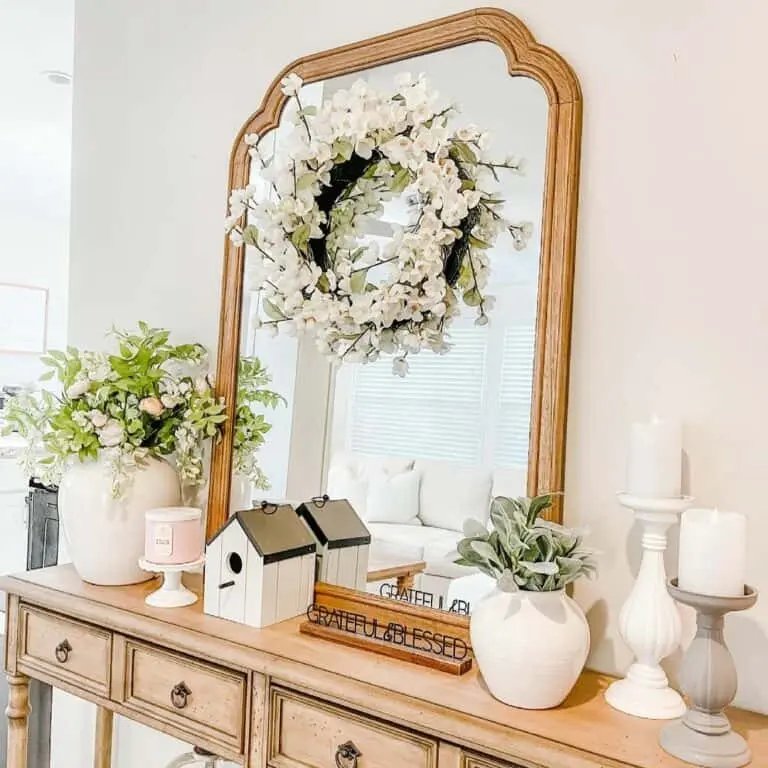

Hang a white flower wreath directly on a wood frame mirror to add depth and a soft, layered feel to your console table display. The wreath frames the reflection without blocking it, giving the arrangement a finished, intentional look.
Pair this with neutral decor in white and gray tones to keep everything cohesive. Green stems or small potted plants on the table below tie the wreath’s natural elements down to the surface, grounding the whole vignette.
Light wood furniture suits this style especially well — it keeps the palette warm without competing with the white blooms.
19 White Interior Door
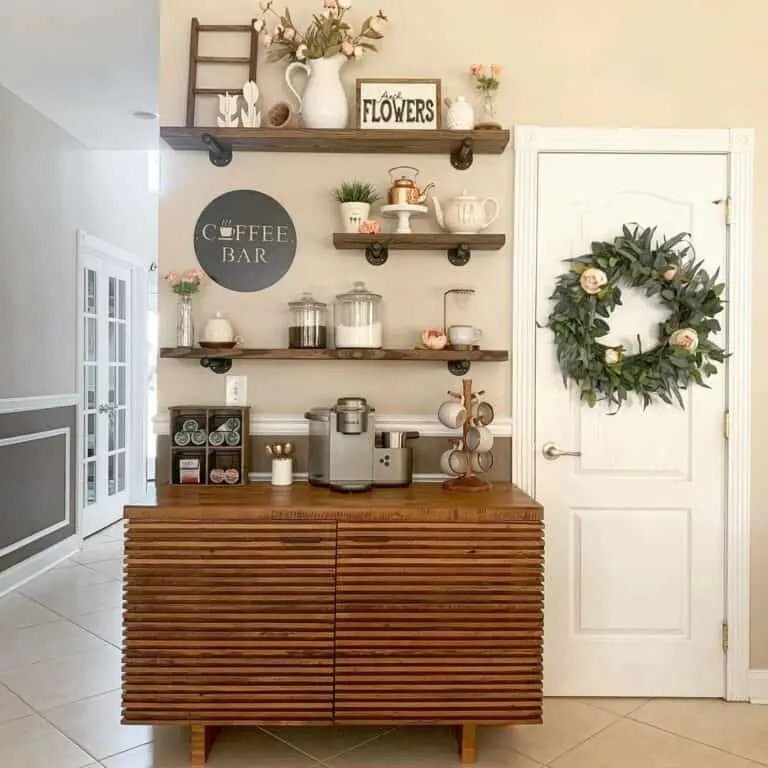

A cream-colored floral wreath on a white interior door ties a coffee bar vignette together without competing with the wood tones and black metal shelving nearby. The neutral palette lets the wreath feel intentional rather than added as an afterthought.
Interior doors are often overlooked as display spots, but they offer a flat, visible surface that frames a wreath naturally. Cream blooms specifically soften the contrast between white paint and warm stained wood, bridging two very different materials in the same corner.
20 Vintage Floral Table
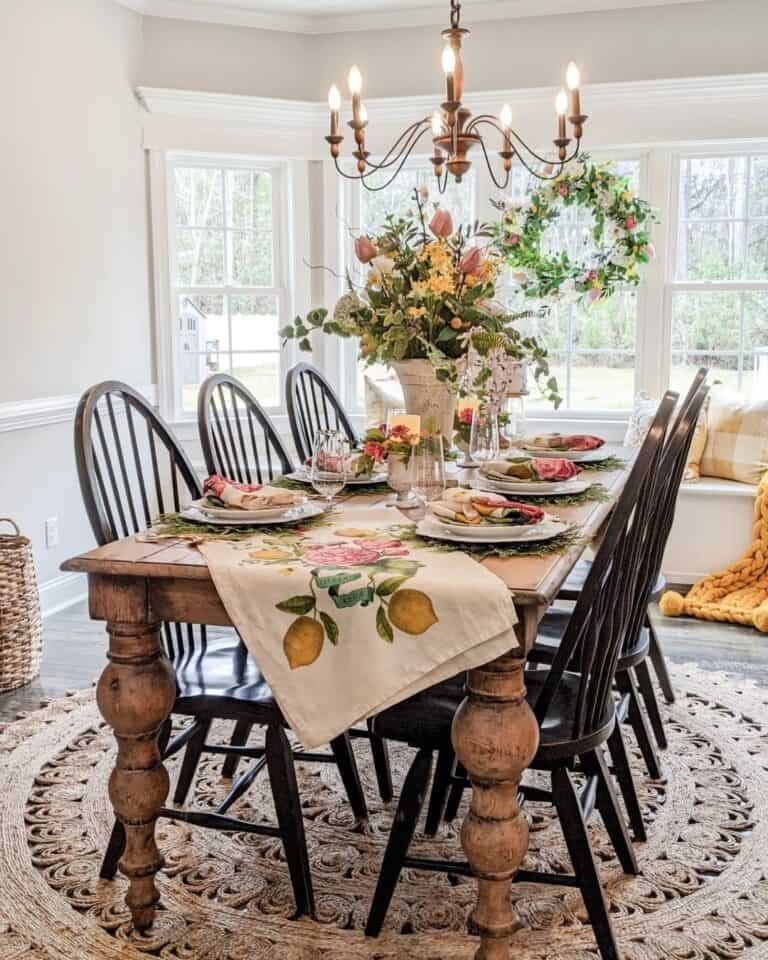


Mixing vintage florals with everyday table items — think mismatched china, linen napkins, and glass tumblers — gives the whole setup a lived-in, relaxed feel rather than something overly formal. Lemons scattered among the place settings add a pop of yellow that ties naturally into a summer color palette.
A vase of fresh flowers anchors the centerpiece without overwhelming the table. Overhead, a metal chandelier adds an industrial contrast that actually grounds the vintage softness below, preventing the look from feeling too precious or fussy.
21 White Bathroom Door
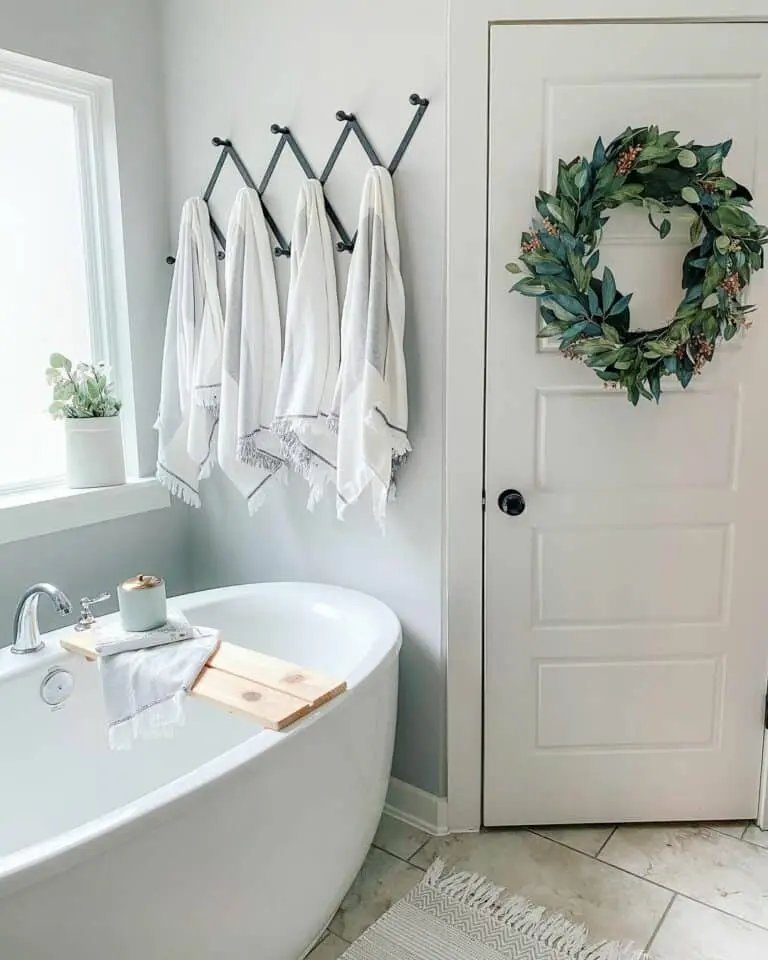

A green wreath hung on a white bathroom door brings a fresh, organic contrast to the clean, neutral tones around it — without competing with other elements in the space. White acts as a natural backdrop, letting the wreath’s color and texture genuinely stand out.
This setup pairs the wreath with a black accordion towel rack and a freestanding oval tub, showing how a single seasonal piece ties different materials together. Matte black hardware and light wood tones both find a common thread through that single touch of green.
22 Pale Green Door
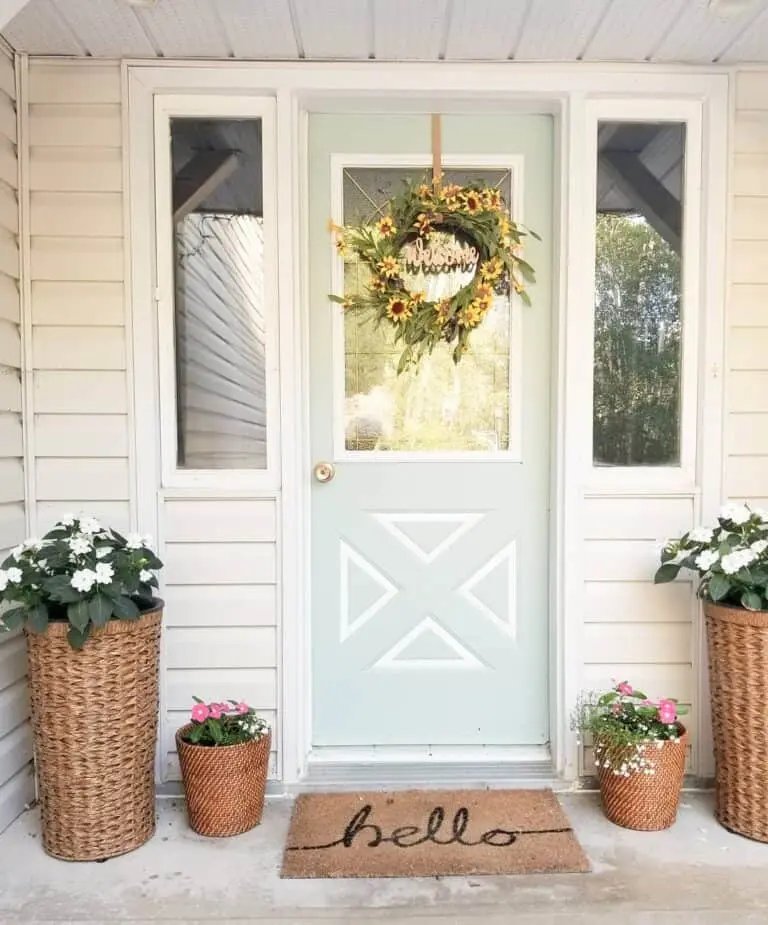


Pale green paired with a bright sunflower wreath is a combination that feels fresh without trying too hard. The soft, muted door color lets the yellow blooms pop without competing for attention.
Woven planters on either side of the door reinforce the natural, organic feel rather than making the space look overly curated. White and pink flowers inside those planters echo the wreath’s cheerful energy while keeping the overall palette cohesive.
This setup shows how a single wreath can anchor a whole porch display when the surrounding elements share a similar relaxed, garden-inspired tone.
23 Small Orange Wreaths
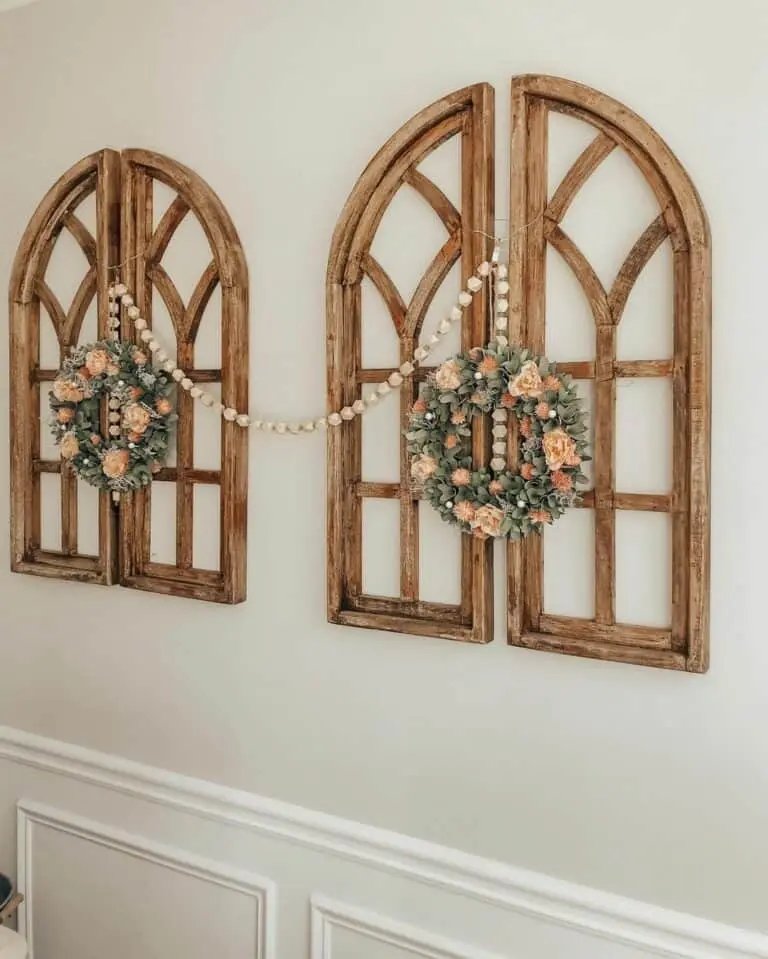


Small orange flower wreaths paired with stained wood frames give this neutral wall real warmth without overwhelming it. The natural wood tones pull out the orange hues, making each wreath feel intentional rather than decorative for decoration’s sake.
A beige beaded garland strung between the frames ties the whole arrangement together horizontally. That connective element is what stops the wreaths from reading as two separate, unrelated objects.
Off-white walls and white wainscoting keep the backdrop soft enough that the orange pops without clashing. This color balance suits rooms where you want seasonal personality without committing to bold paint or wallpaper.
24 Pink Floral Door Wreath
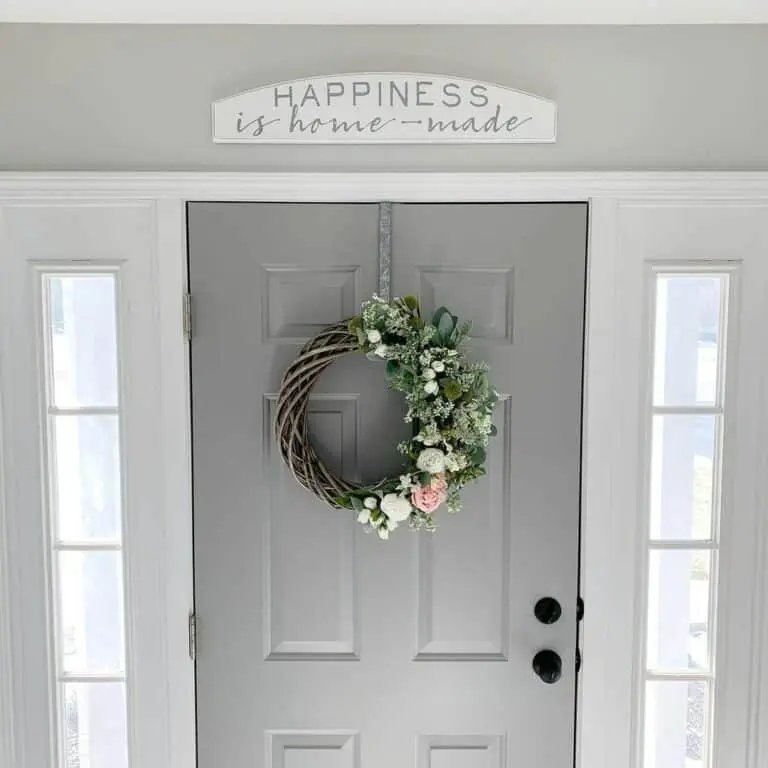


White and pink blooms layered against a gray door create a soft contrast that draws the eye without competing with the surrounding architecture. Mixing flower sizes — think large peonies paired with smaller ranunculus — gives the wreath a full, natural feel rather than a flat, uniform look.
The white sidelights and wall sign above already bring a clean, neutral backdrop, so the pink tones have room to pop. Keeping the hardware dark anchors the whole arrangement and stops the softness from feeling too sweet.
25 Foliage and Flowers



Lush greenery and colorful blooms give a summer wreath its full, layered look — without them, the whole thing feels flat and unfinished. A mix of deep green foliage with warm orange and yellow flowers hits that sweet spot between vibrant and natural.
Pairing contrasting colors like these creates visual depth, especially against a light background like a white wall or door. Orange and yellow flowers pop against green leaves the same way sunflowers stand out in a garden — your eye is immediately drawn in.
26 Fresh Green Wreath
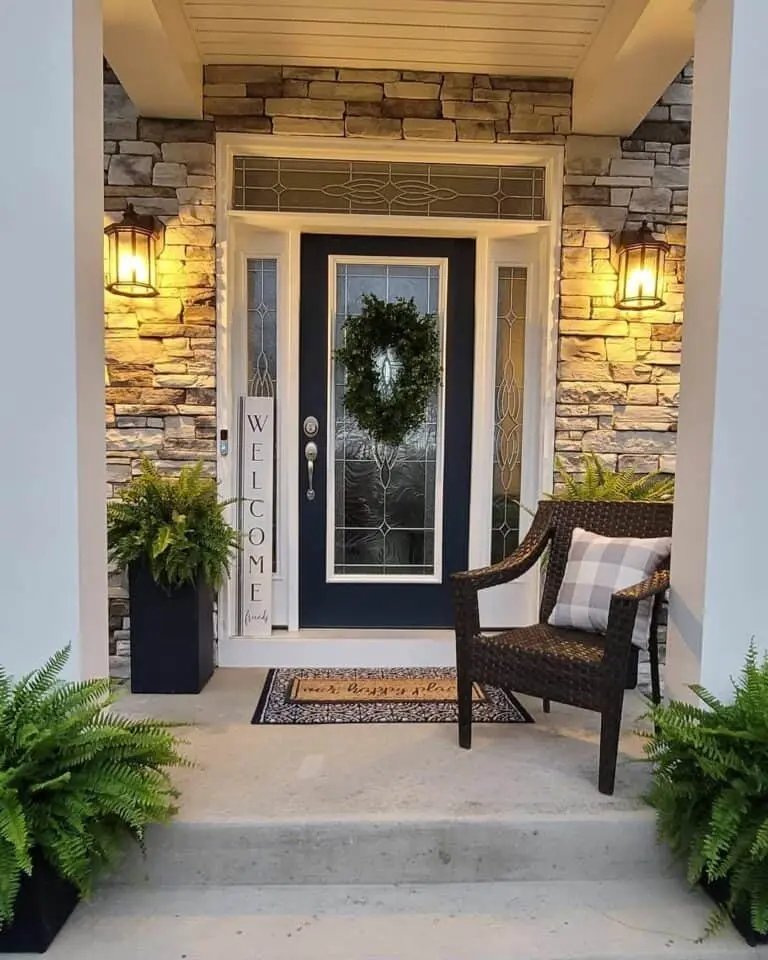
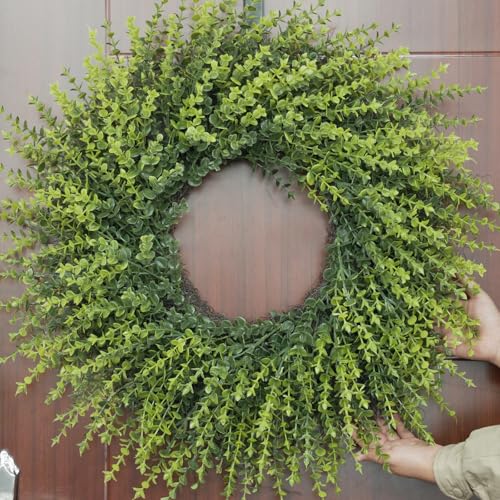
A lush green wreath keeps things simple and lets the surrounding decor do the talking. Paired with ferns in square black planters on either side, the layered greenery creates a cohesive, garden-fresh look at the entrance.
The white wooden welcome sign leaning against the door adds a casual, lived-in charm rather than feeling too formal or staged. Grey checkered pillow on the outdoor chair ties the neutral tones together without competing with the natural greens.
This setup shows how a single-color wreath can anchor an entire entryway when the surrounding textures and materials complement each other.
27 Stained Wood Double Doors
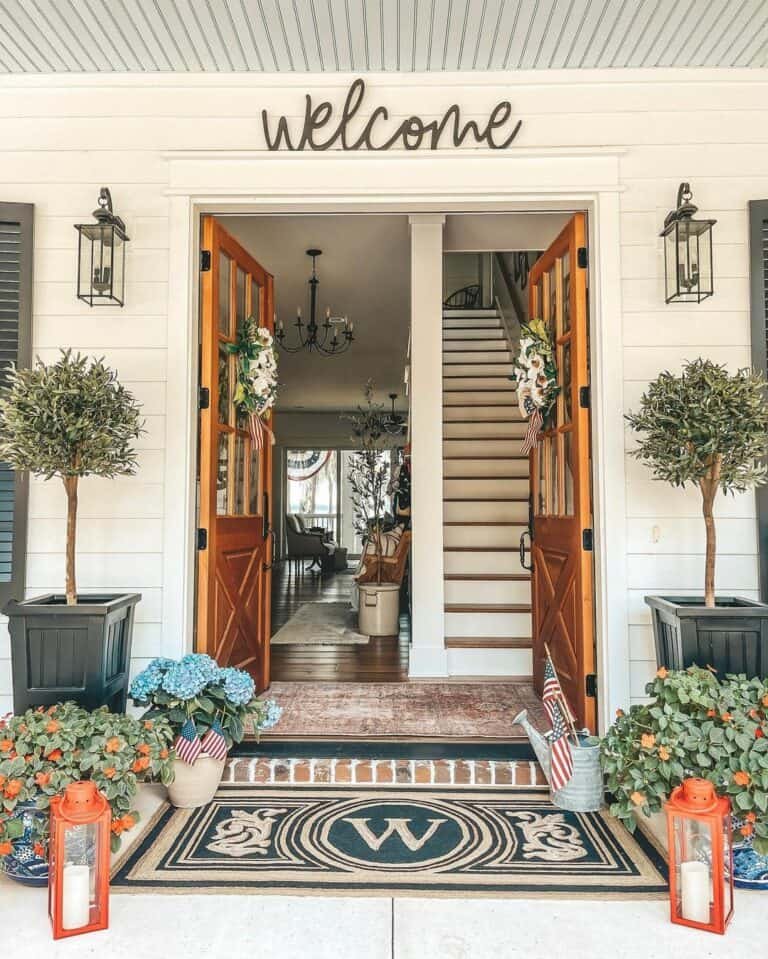

White wreaths against rich stained wood create a contrast that draws the eye straight to the entryway — the light blooms pop against the dark grain in a way that feels intentional and polished. Double doors give you twice the canvas, so matching wreaths on each panel keep the look balanced rather than lopsided.
Flanking greenery and black lantern sconces pull the whole arrangement together. Those sconces do real work here — the warm glow they cast at dusk makes the white florals and deep wood tones feel even richer once the sun goes down.
28 White Purple Floral Wreath
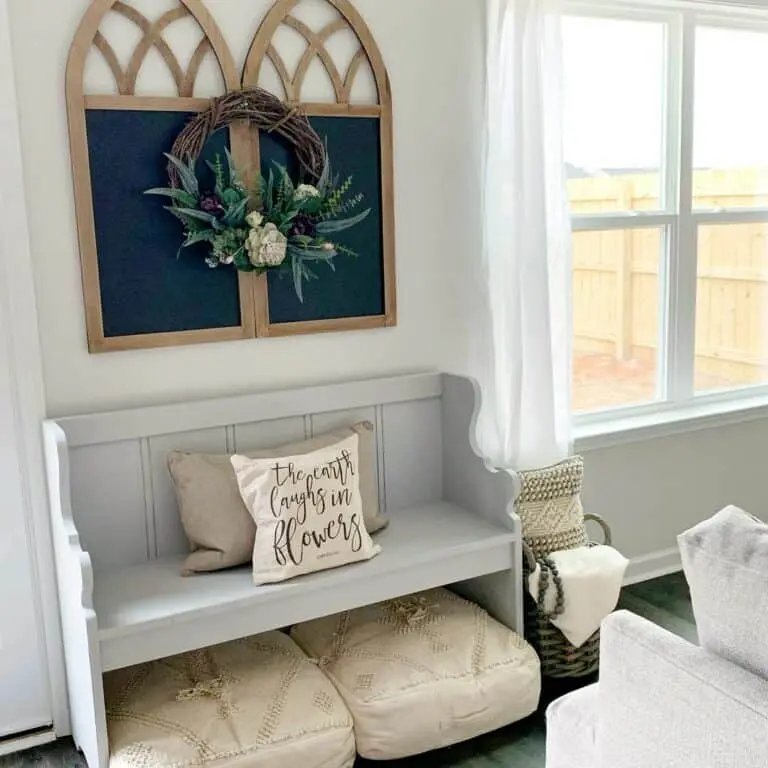


White and purple florals pair naturally with stained wood — the warm brown tones pull out the depth in deeper purple blooms, keeping the palette from feeling too cold or washed out. Mounted above a white bench, the wreath becomes a focal point without overwhelming the space.
Beige throw pillows on the bench soften the contrast between the dark wall decor and the bright white surroundings. That layering of warm neutrals alongside cool purples gives the whole vignette a relaxed, lived-in feel rather than something overly curated.
29 Pinecone Door Wreath
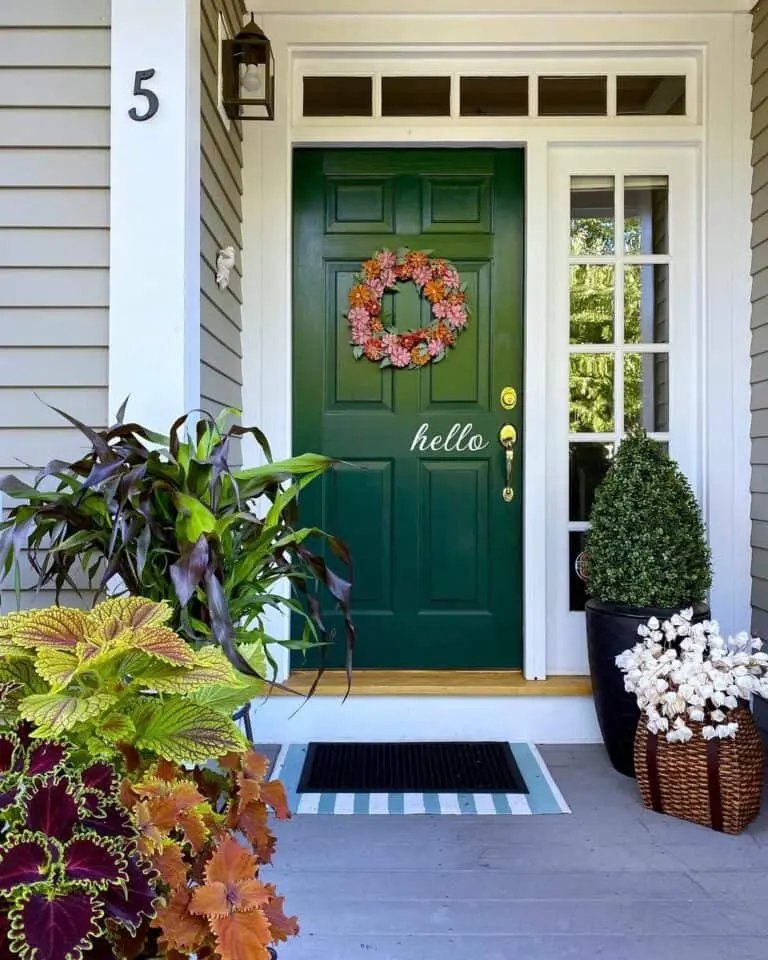


Pinecones bring a natural, earthy texture that suits transitional seasons when summer fades into fall — they feel collected and handmade rather than store-bought. Layering them in overlapping rows on a grapevine base gives the wreath a full, dimensional look that holds its shape for months.
Pairing it with white blooms and a dark green door keeps the palette grounded without feeling heavy. The contrast between the rough pinecone surface and the smooth painted door actually draws the eye straight to the entrance.
30 Lemon White Wreaths
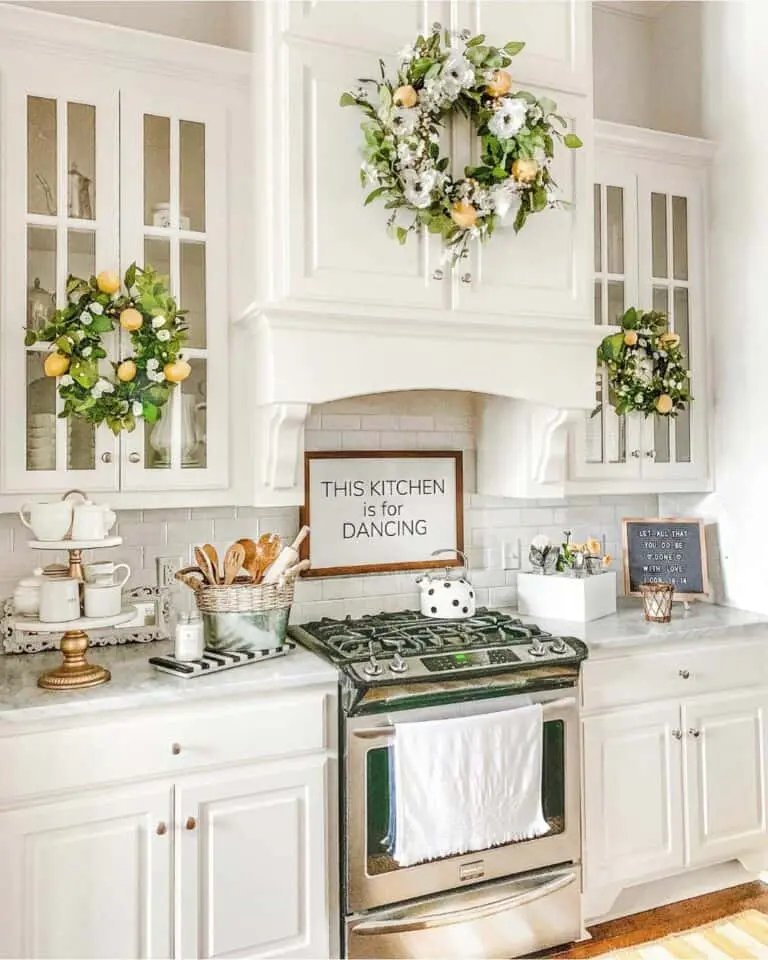


Lemons and white flowers make a surprisingly fresh pairing against white cabinetry — the yellow pops without overwhelming the space. Hanging wreaths directly on glass-front cabinet doors and a range hood turns everyday kitchen fixtures into part of the seasonal display.
Faux lemons hold up better than real ones in a wreath form, keeping their color and shape through the whole summer. Mixing in white blooms like ranunculus or small daisies softens the citrus theme and ties the wreath back to the white-and-gray kitchen palette naturally.
31 Patriotic Floral Wreath
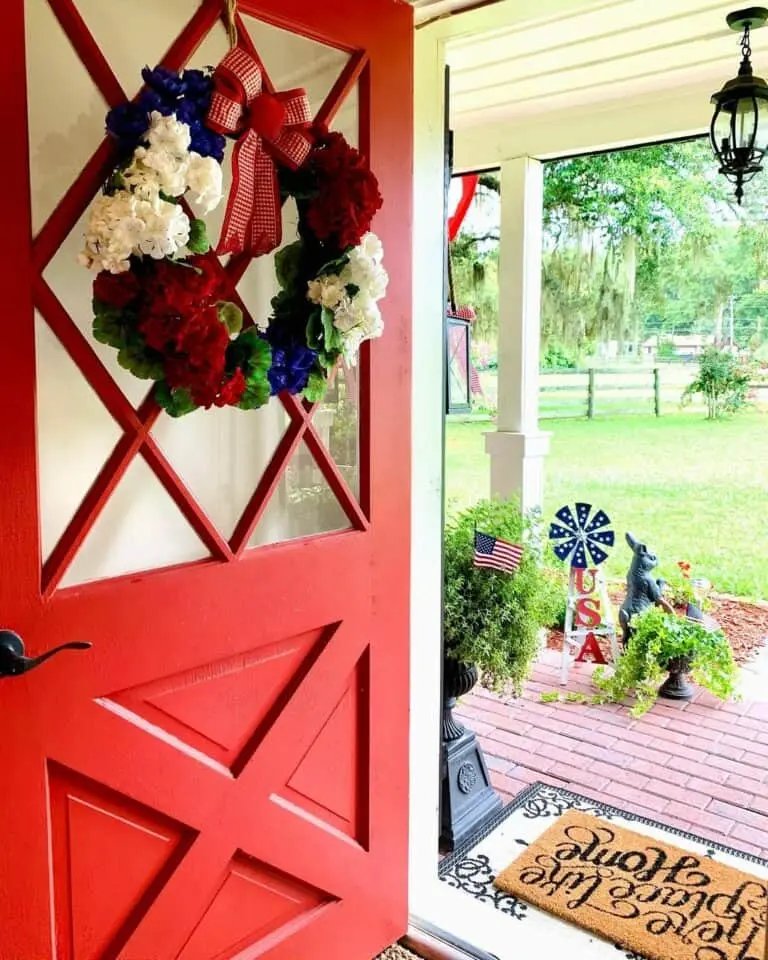


Red, white, and blue silk florals layered with small star picks give a patriotic wreath real depth without looking flat or cheap. Mixing flower sizes — think large red peonies alongside smaller white daisies — draws the eye around the whole arrangement.
A deep red door like this one actually intensifies the wreath’s colors by contrast, making the blues pop forward. Hang it centered at eye level so the symmetry feels intentional rather than accidental.
Weatherproof silk blooms hold their color through summer heat and occasional rain, keeping your entrance fresh from the Fourth all the way through August.
32 Pale Green Door Wreath
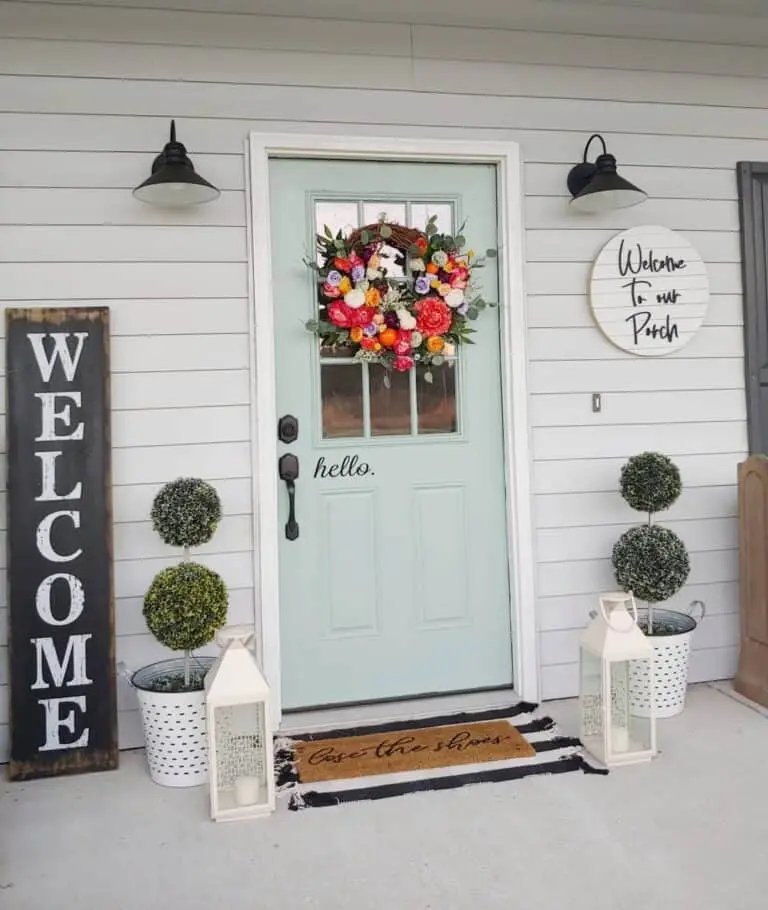

Pale green doors have a soft, muted quality that lets a floral wreath pop without competing for attention. Pairing warm florals against that cool sage tone creates natural contrast that reads well even from the street.
The black sconces and clipped topiary trees here add structure around the organic wreath shape, so the whole entrance feels balanced rather than busy. Repeating crisp white through the planters ties everything together without extra effort.
This color combination — cool green, black iron, white planters — gives you a framework that suits most summer floral palettes, from blush pinks to sunny yellows.
33 White Flower Wreath
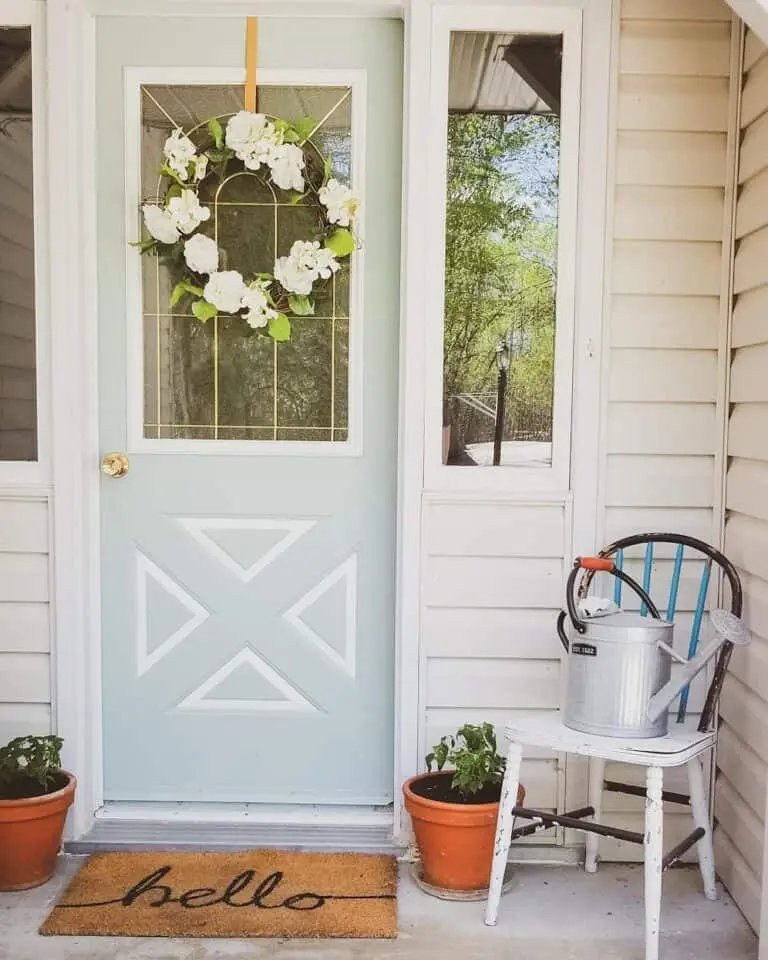
White blooms against a pale green door create a soft, airy contrast that feels fresh rather than fussy. All-white wreaths read especially clearly against colored doors because the eye isn’t competing with multiple shades.
Terracotta planters flanking the entrance add warmth and texture, stopping the look from feeling too cool or washed out. That mix of earthy tones with crisp white is what gives this entryway its balance.
A rustic spindle chair beside the door pulls the vignette together, turning a plain entrance into a proper welcoming moment.
34 Porch Floral Wreaths
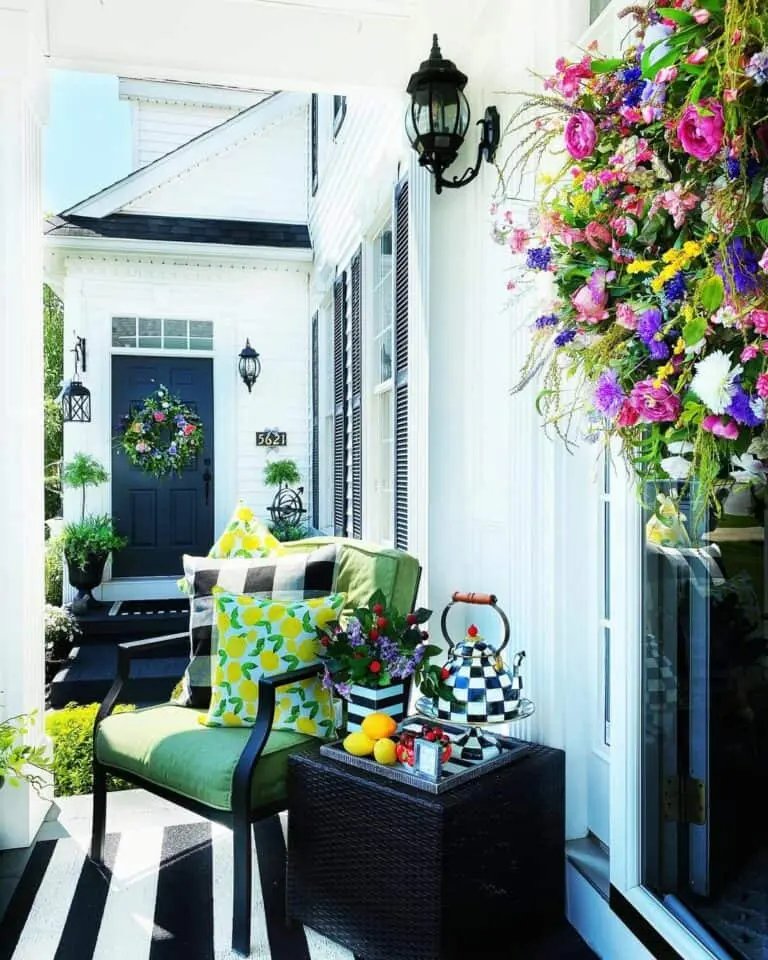


Black accents do a lot of heavy lifting on a porch like this — the lantern sconces, rattan table, and chair frame all repeat the same dark tone, so a wreath with deep green foliage and white blooms ties everything together without competing. Keeping the color palette tight like this makes the whole space feel intentional rather than cluttered.
Floral wreaths with trailing greenery suit a white siding backdrop especially well, since the light surface lets the wreath’s texture and depth really show. Even a simple eucalyptus and daisy combination delivers that layered, lived-in look that styled porches are after.
35 Blue Door Wreath
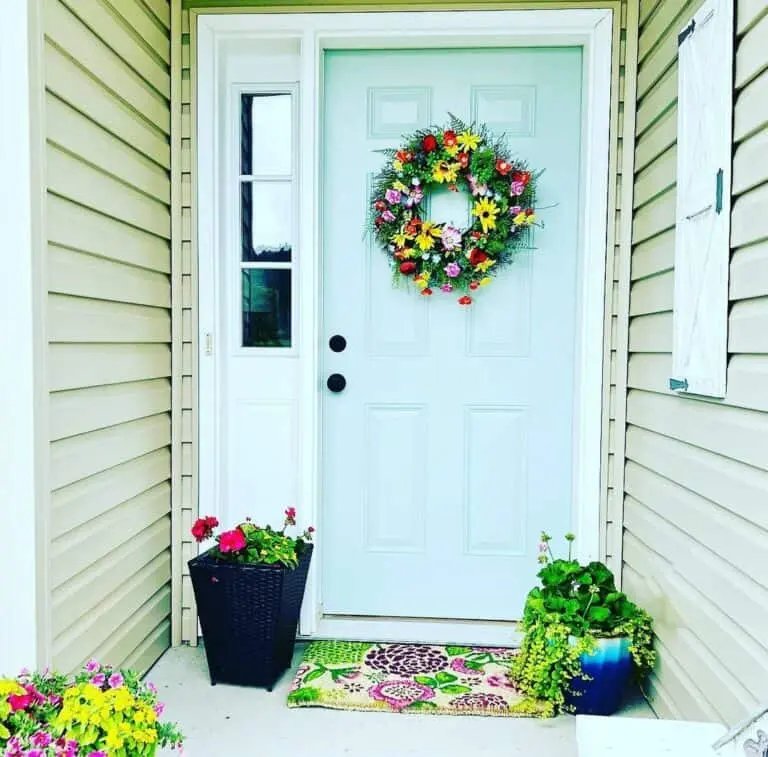


Warm floral tones like yellow, red, and pink pop especially well against a light blue door — the contrast between the cool backdrop and the warm blooms gives the whole entryway a lively, sun-soaked feel. Softer door colors tend to let the wreath take center stage without competing.
Pairing the blue door with a white sidelight and potted porch flowers ties everything together visually. Repeating those same warm colors from the wreath in your porch planters creates a cohesive look that feels intentional rather than random.