25 Wall Decor Ideas for Living Room
Walk into a living room and the first thing the eye finds is usually the wall behind the sofa. It sets the mood for the whole room before anyone notices the rug, the cushions, or the coffee table.
That wall earns its attention, though.
It is the biggest blank surface in the room, it faces everyone who sits down, and it is where a room either feels finished or feels like something is missing.
These twenty-five ideas cover every kind of living room wall, from the TV wall to the fireplace, so there is one here for whatever blank space is bothering you.


1. Triptych Art Above the Sofa
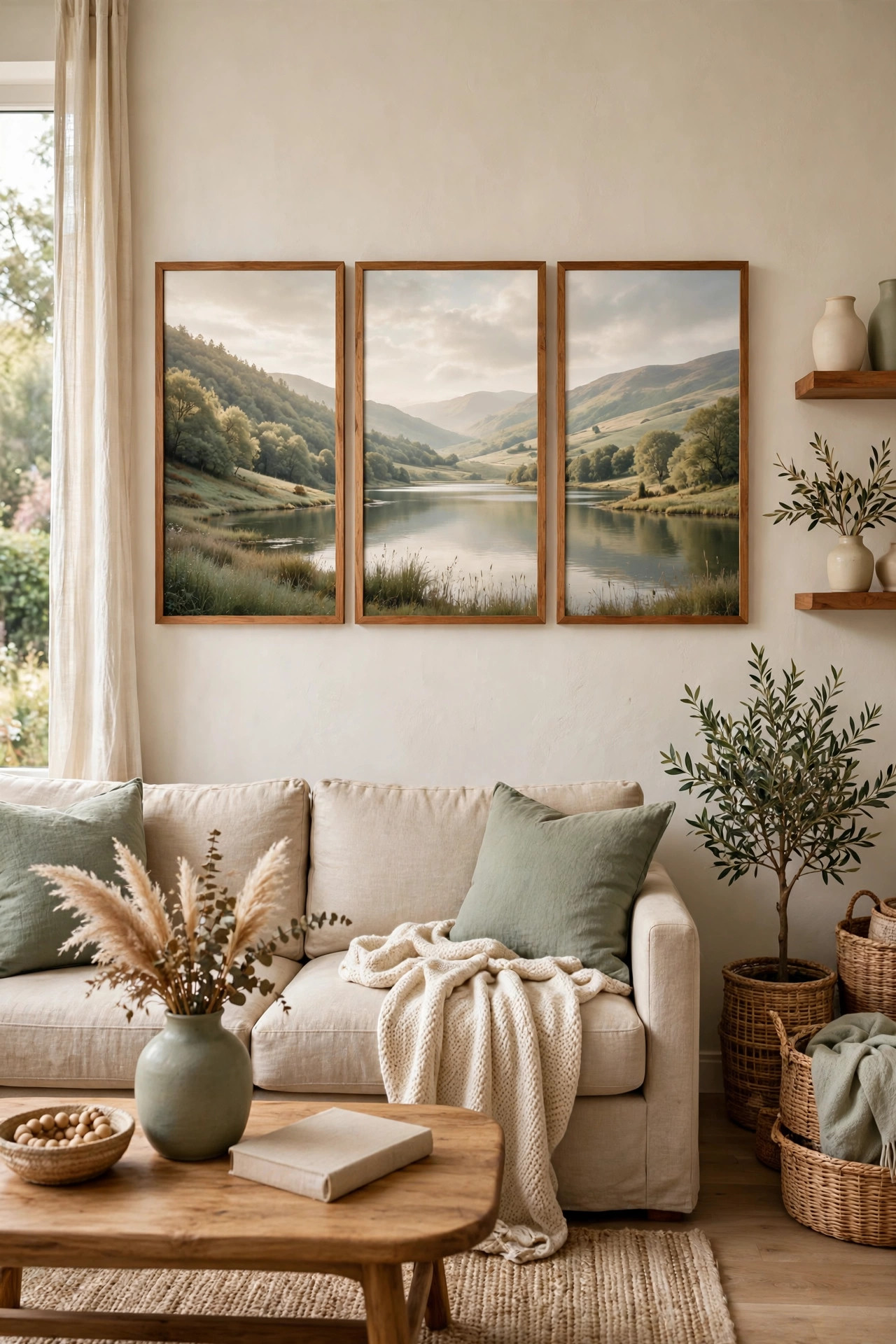
A triptych, one image split across three panels, fills a sofa wall without the busy feeling a full gallery can bring.
Hang the three panels as one unit, about two-thirds the width of the sofa, with the center of the whole arrangement around fifty-seven to sixty inches from the floor.
Keep one to two inches between the panels so they read as a single piece.
Choose an image with a calm horizon or a soft abstract wash, because a busy triptych above a sofa competes with everything else in the room, while a quiet one pulls the whole seating area together.
2. Symmetrical Art Pair Flanking a Window
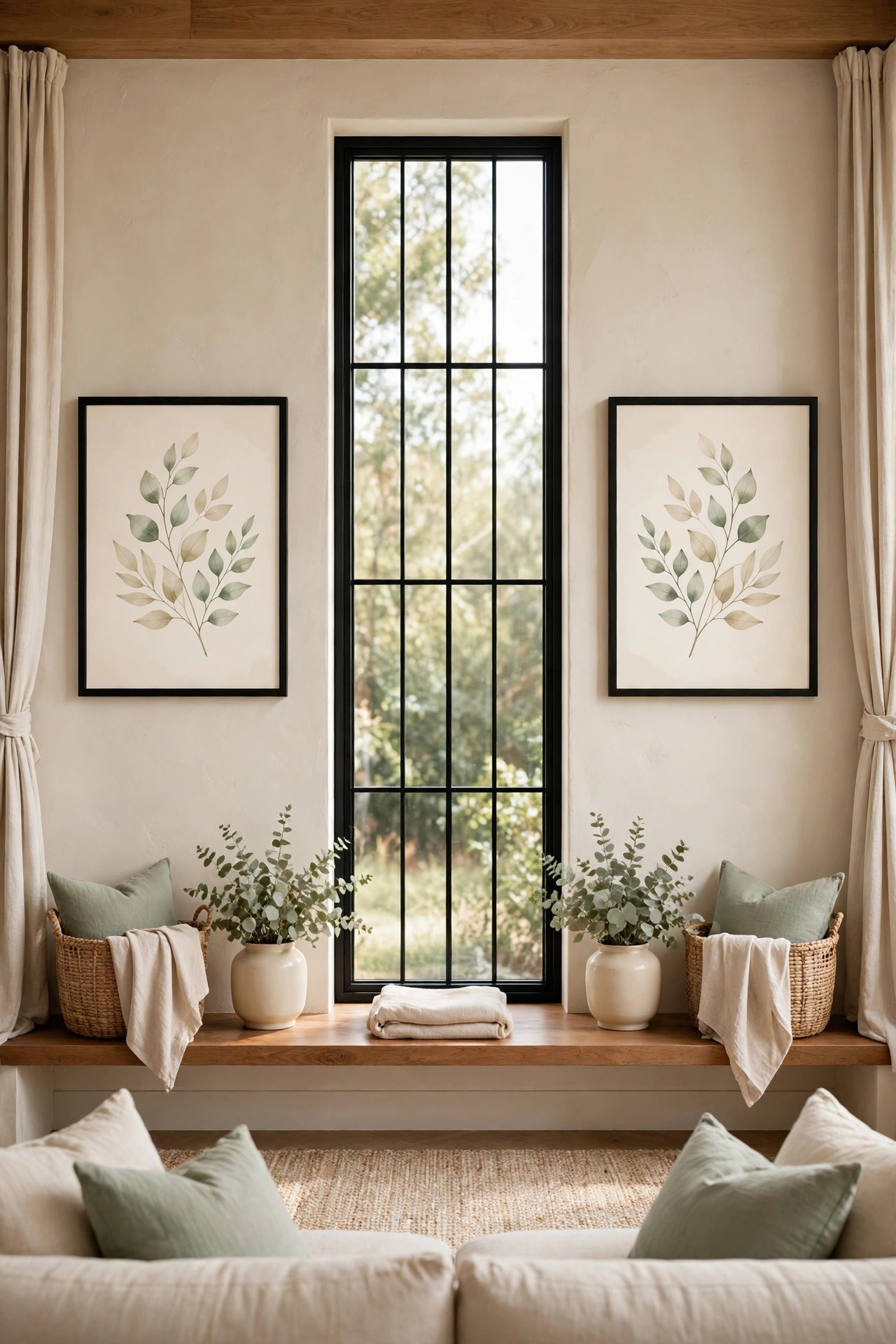
When the sofa wall has a window in the middle, the window itself becomes the centerpiece, and a matching pair of frames on either side makes it look intentional.
Use two frames of the same size and finish, hung at exactly the same height, with their centers at eye level.
Keep the art calm and similar in tone, since two loud pieces fighting across a window will steal attention from the view.
This works best when the window is the only window on that wall, because the symmetry gives the whole wall a balanced, settled feeling.
3. TV Wall Disguised with Art
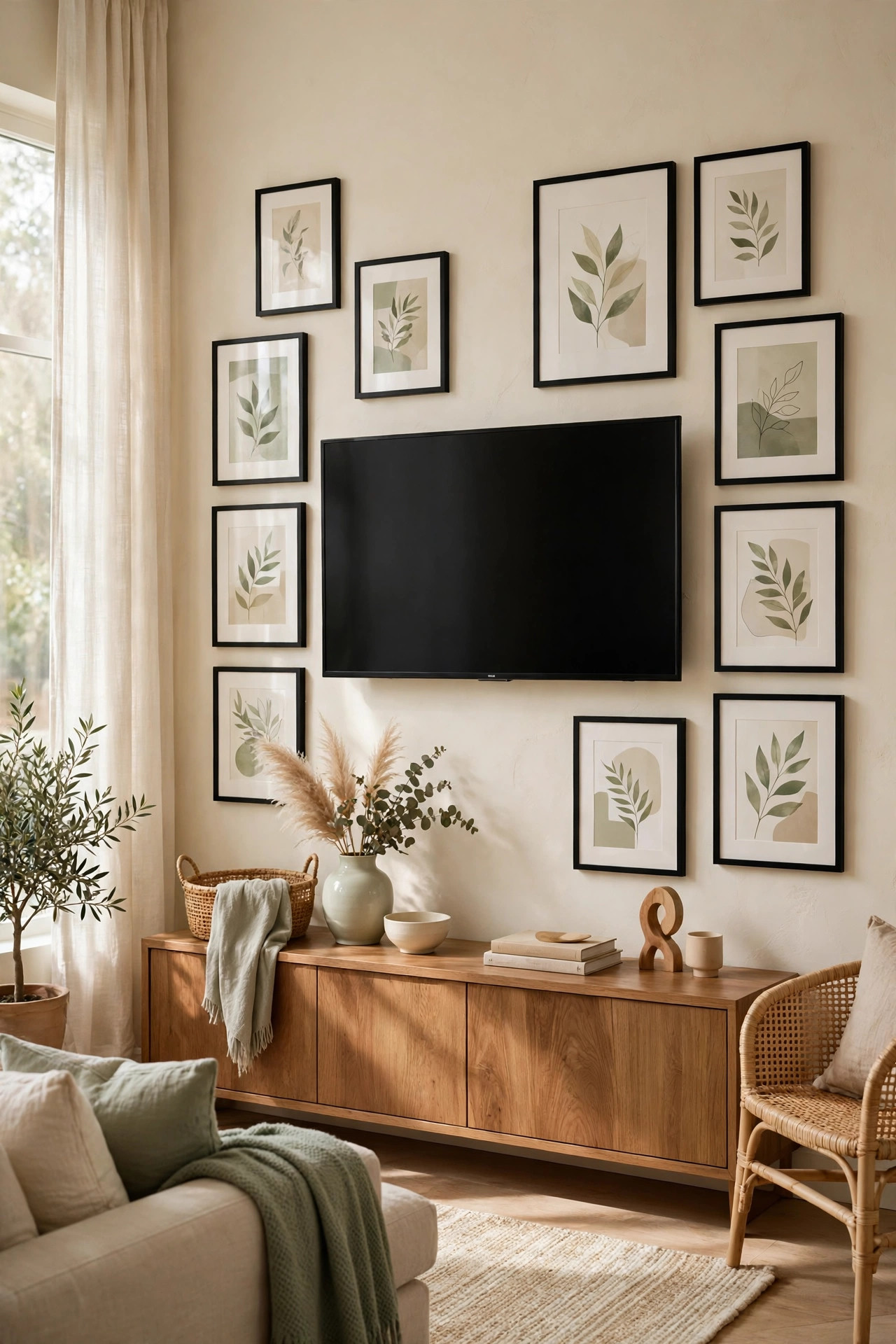
A television does not have to look like a black hole on the wall. Surround it with framed art in the same frame colour, and the screen becomes one more rectangle in a considered arrangement instead of the only thing anyone sees.
Mount the TV with its center 42 to 48 inches from the floor, which is eye level from a seated sofa.
Hide the cables inside the wall or behind a slim cord cover painted the wall colour, because a single dangling cable undoes the whole disguise in one glance.
4. Fireplace Mantel Art Wall
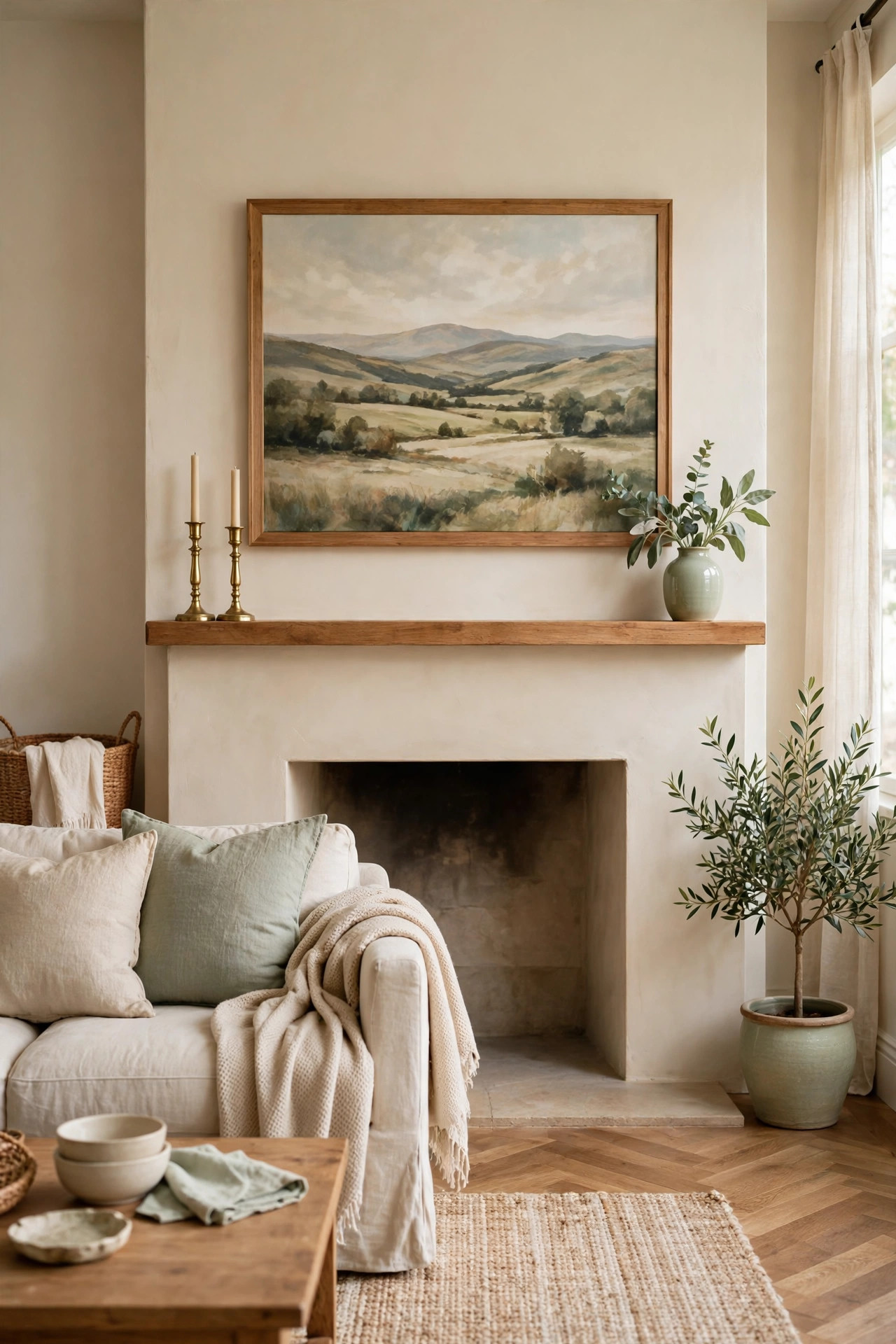
The wall above a fireplace mantel is the natural focal point of a living room, and one large piece of art there does more than a row of small objects ever will.
Choose art about two-thirds the width of the mantel, and hang it so its bottom edge sits six to eight inches above the mantel shelf.
Leaning the art against the wall instead of hanging it gives a softer, more relaxed look, and it makes swapping the piece later a five-minute job.
Keep the mantel itself simple underneath: a pair of candlesticks on one side and a small vase on the other, so the art stays the star.
5. Limewash Textured Accent Wall
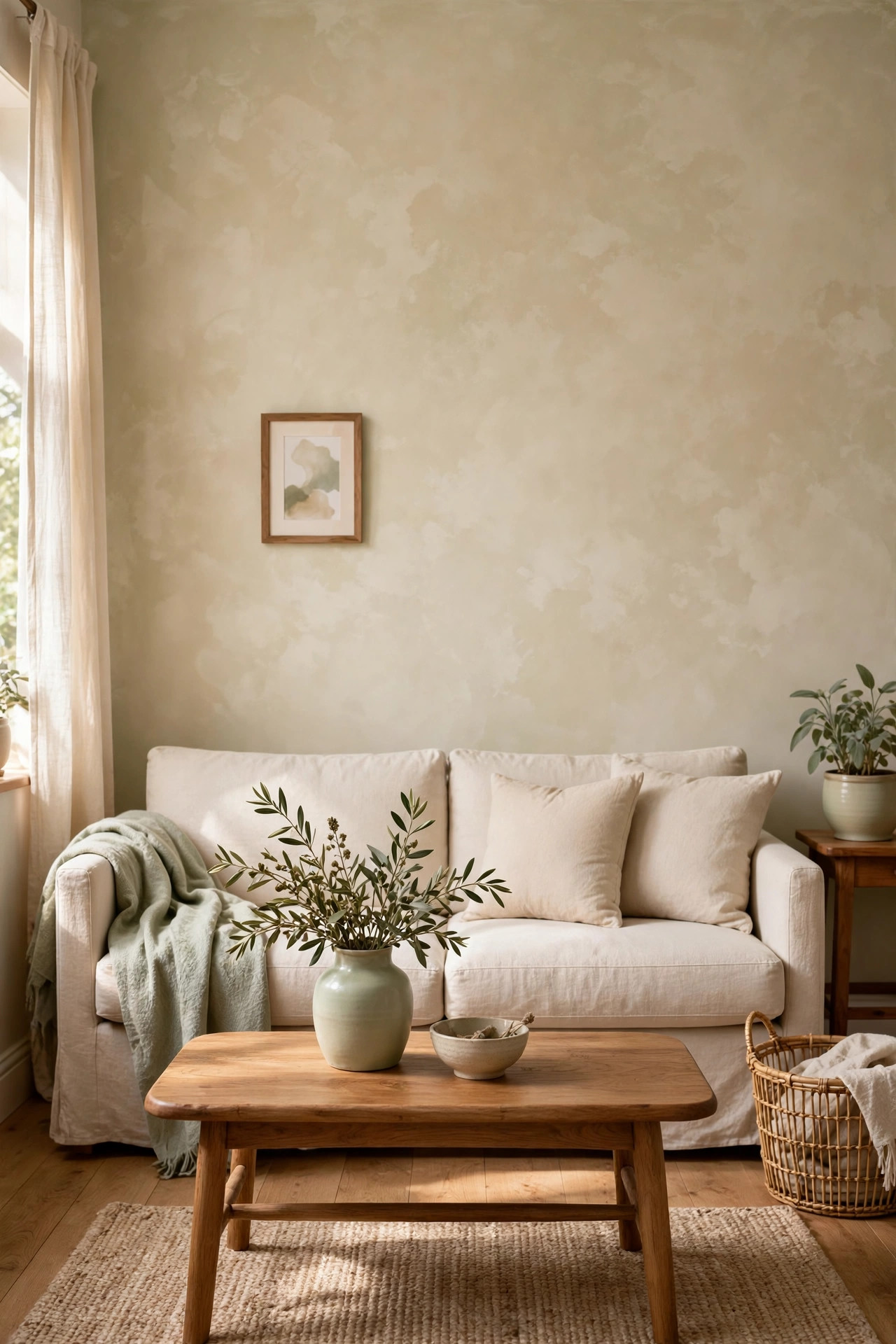
A limewash accent wall adds soft movement and depth without any pattern at all, which makes it perfect behind a sofa in a room that already has plenty going on.
The finish has a cloudy, hand-painted look that changes slightly as the light moves across it during the day.
Pair it with a plain linen sofa and warm wood tones, and hang just one piece of art on it. Two coats are usually enough for full coverage, and the wall does the decorating on its own, so resist the urge to fill it up.
6. Layered Picture Ledge
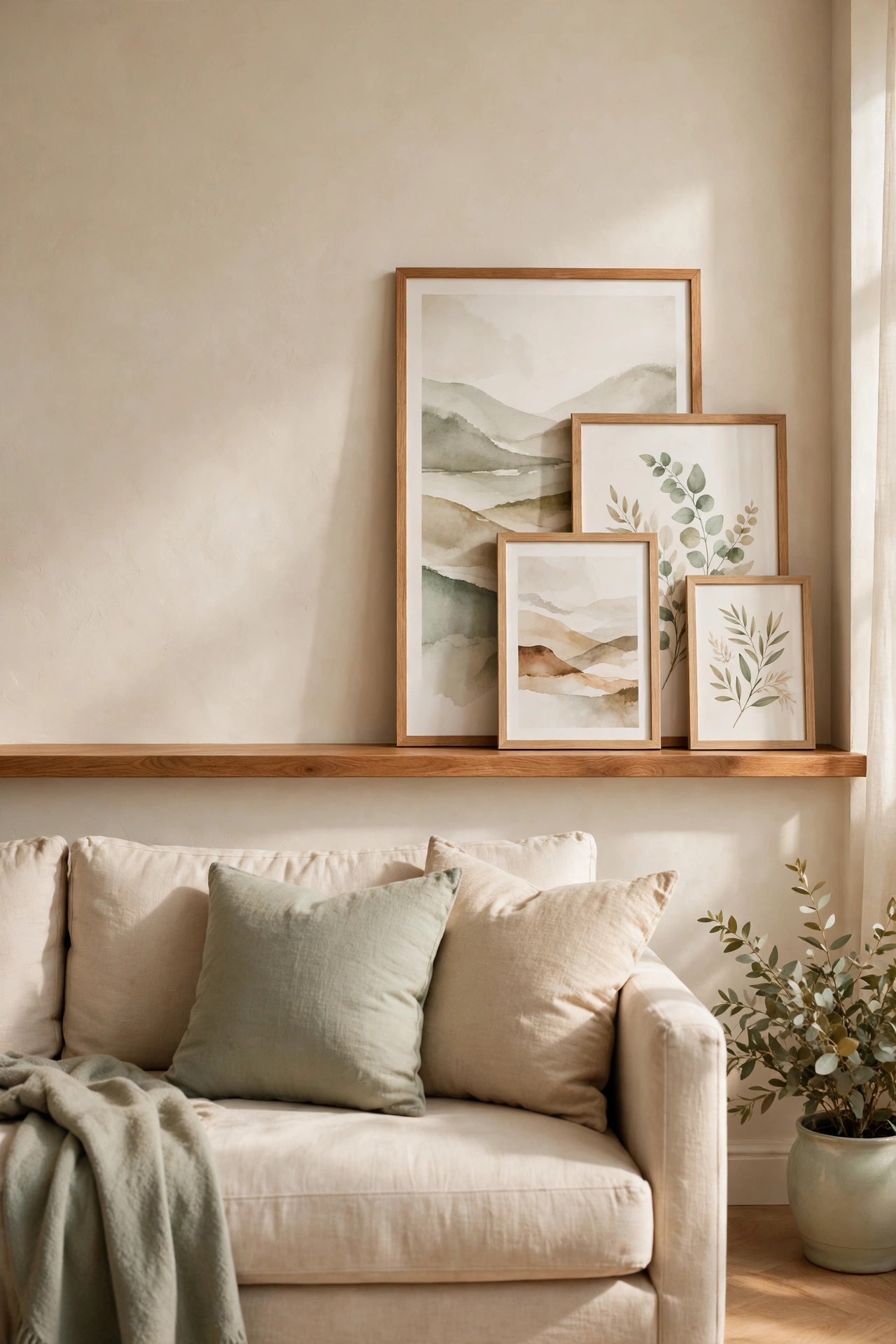
A picture ledge lets art lean instead of hang, which means the arrangement can change in minutes with no new nail holes.
Fix a wooden ledge forty-eight to sixty inches long above the sofa, and layer three to five frames on it, tallest at the back and smallest at the front, overlapping slightly.
Hang the ledge six to eight inches above the sofa back so the frames feel connected to the seating.
Mix one landscape print with a couple of smaller abstracts, and leave a little empty ledge at one end: a ledge packed edge to edge looks like a shop shelf, while one with breathing room looks styled.
7. Large Round Mirror Above the Sofa
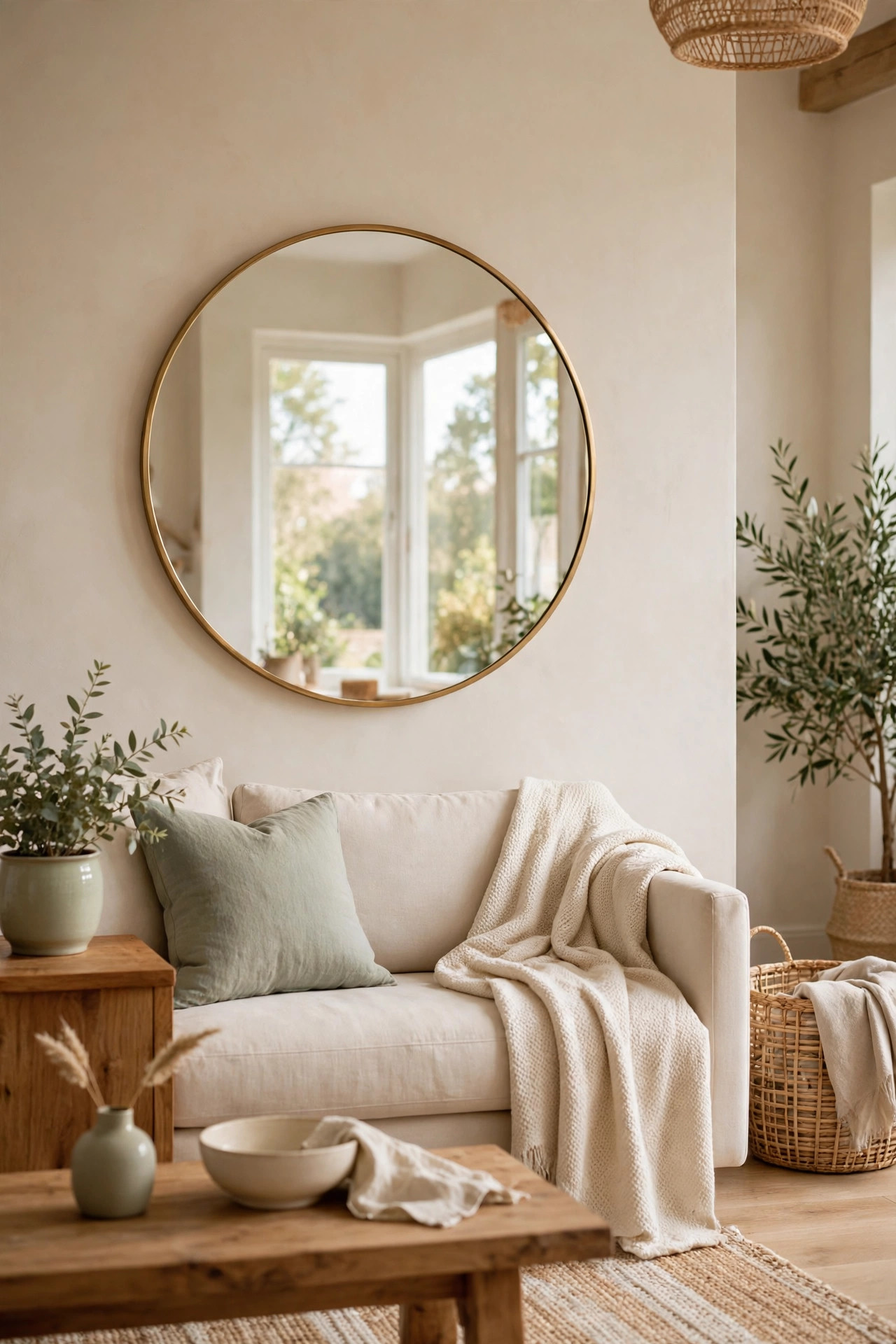
One large round mirror above the sofa is the simplest way to fill a wide wall, and it bounces light around the room in a way no framed print can.
Choose a mirror thirty to thirty-six inches across, with a thin black or brass frame, and center it above the sofa at eye level.
Check what the mirror will reflect before hanging it, because a mirror facing a window doubles the daylight, while one facing a blank wall just doubles the blankness.
Keep the sofa back clear below it: cushions piled high against a mirror make the whole arrangement feel crowded.
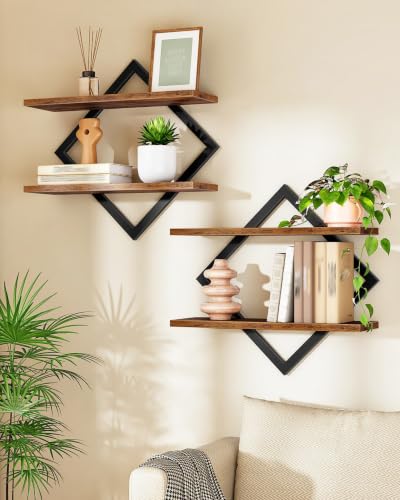
8. Floating Shelves with Art, Books and Plants
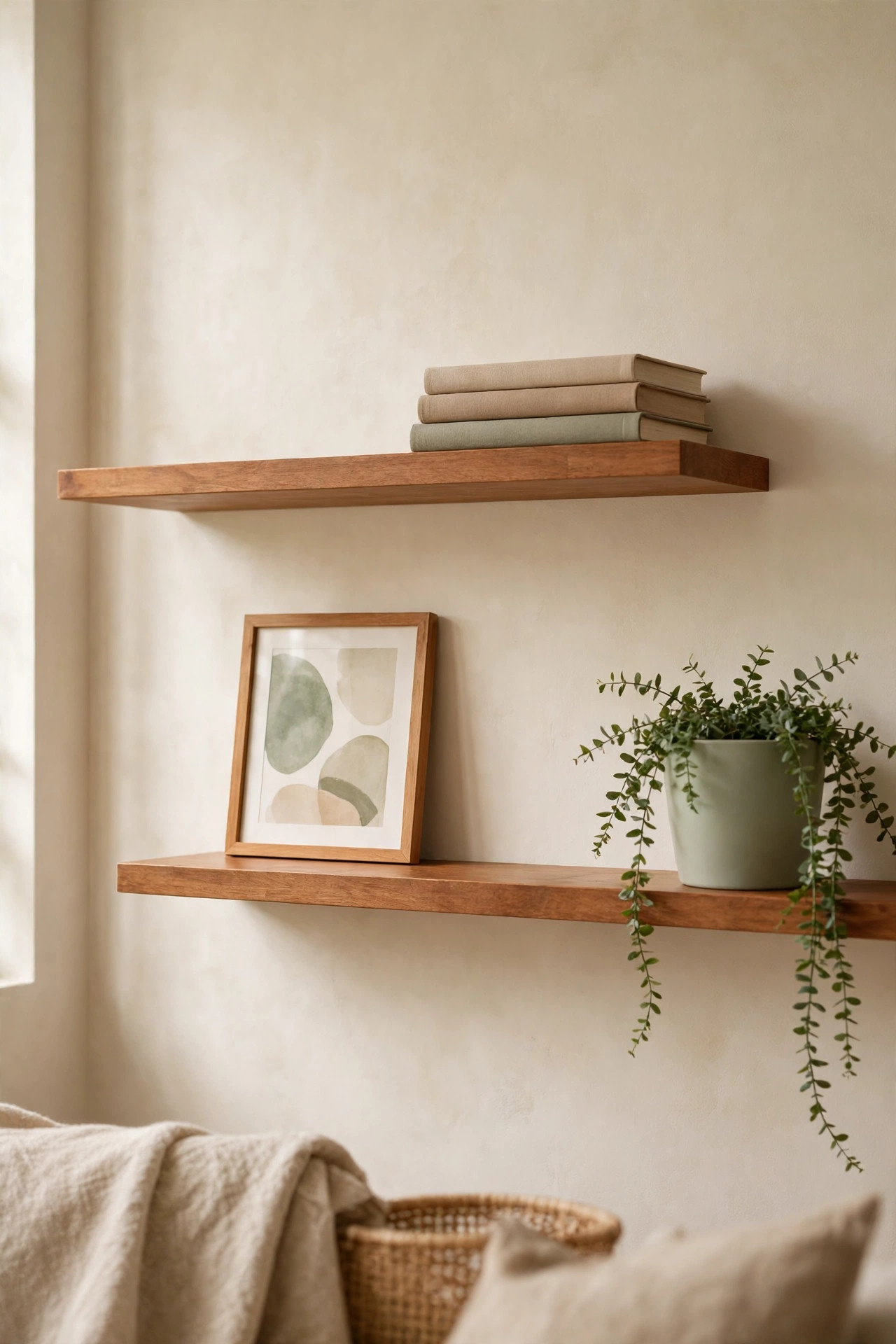
Two or three floating wooden shelves turn a blank living room wall into a display that can change with the seasons. Style each shelf with three things and stop there:
- A stack of two or three books, laid flat
- One small framed print, leaning against the wall
- A trailing plant in a plain pot
Leave about a third of every shelf empty, because the empty space is what makes the objects on it look chosen instead of stored.
Stagger the shelves rather than stacking them in a straight column, so the eye moves across the wall instead of straight up it.
9. Built-In Bookshelf Wall
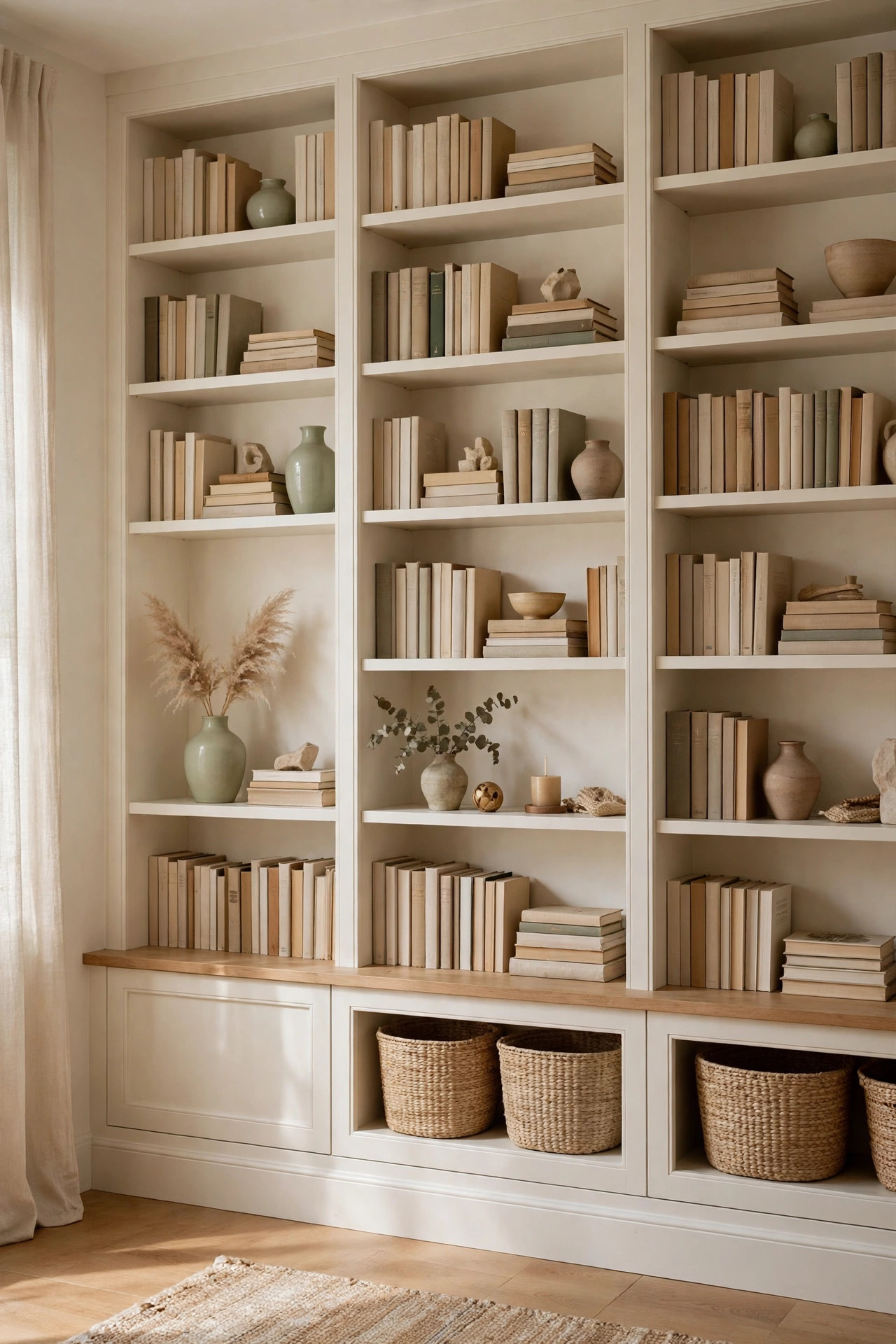
A floor-to-ceiling bookshelf wall makes a living room feel like a library, and it solves the blank wall problem permanently.
Paint the shelves the same colour as the wall so the whole unit reads as architecture rather than furniture, and fill them with a mix of:
- Books, grouped upright in small runs
- One or two objects per shelf, like a vase or a small sculpture
- Baskets on the lowest shelves for the things that never look tidy
I keep the top shelves for display and the middle shelves for the books I actually reach for, because a shelf that is only pretty never gets used.
Leave a few gaps empty on purpose: a shelf packed tight reads as storage, while one with air in it reads as design.
10. Panel Moulding Feature Wall
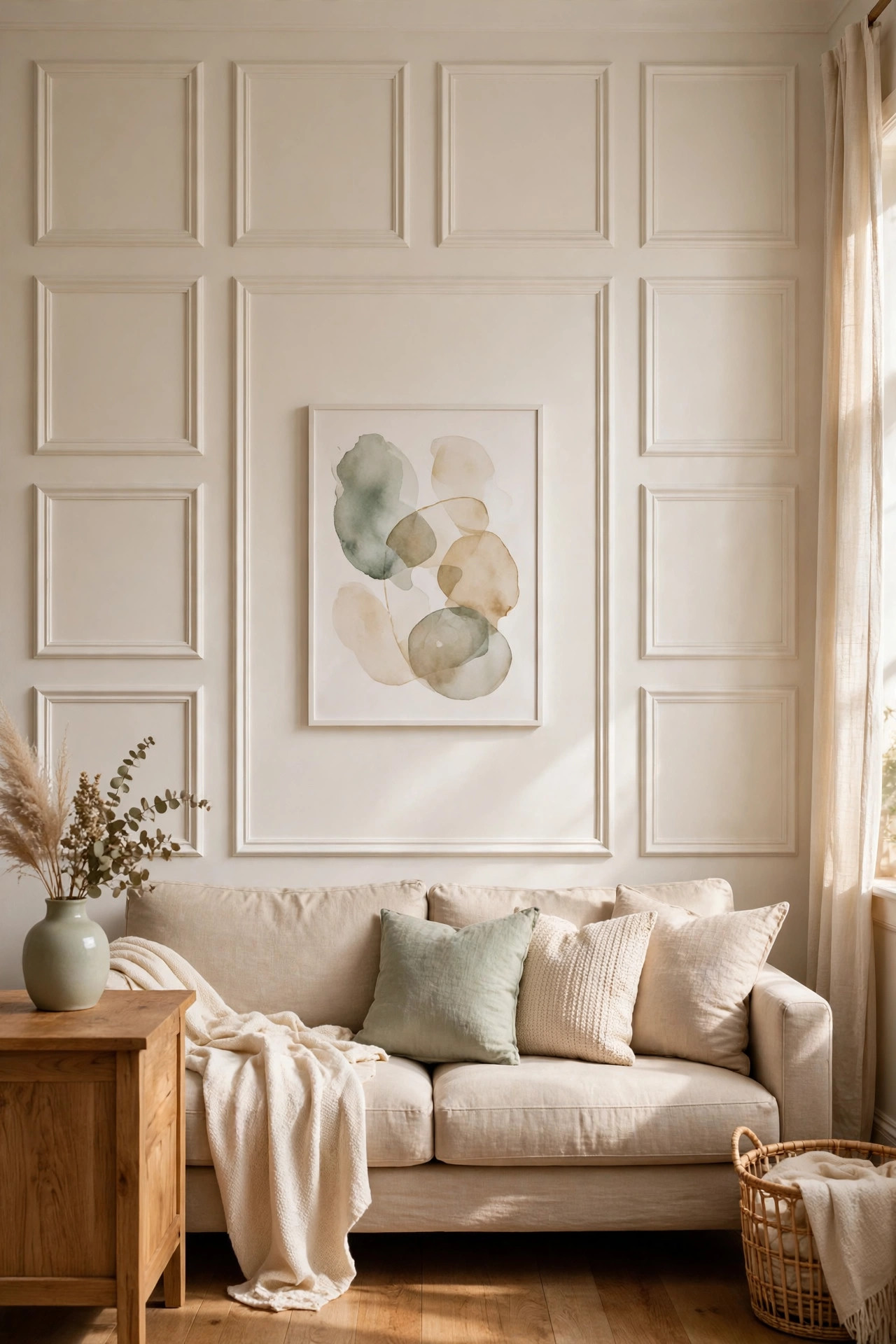
Picture-frame moulding boxes on a wall add the kind of architectural detail that makes a plain living room feel finished, and they cost far less than a full renovation.
Size the boxes to the wall, keeping them even and evenly spaced, with the largest box centered above the sofa.
Paint the wall and the moulding the same colour for a quiet tone-on-tone look, or paint the moulding a shade darker for gentle contrast.
Hang one piece of art inside a single box, or leave the boxes empty and let the moulding itself be the decoration.
11. Grasscloth Wallpaper Accent Wall
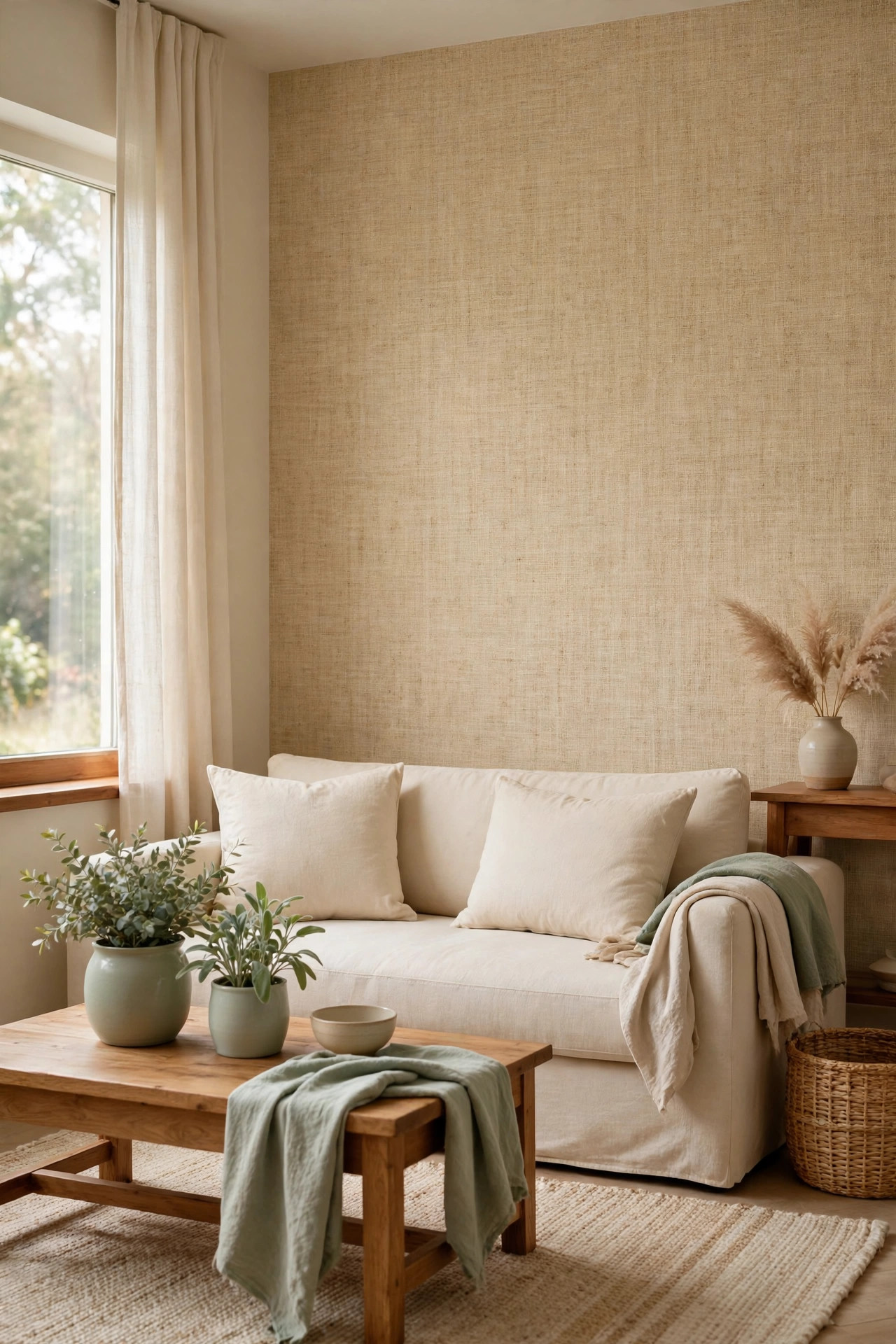
Grasscloth wallpaper brings a natural, woven texture to a living room wall that flat paint can never match. The fibres catch the light differently from every angle, so the wall looks alive even in a room with plain furniture.
Choose a calm colour and let the texture do the work:
- Warm oatmeal
- Soft sage
- Pale stone
Order all the rolls from the same dye lot, since grasscloth varies slightly between batches and a mismatched roll shows. Keep the sofa and cushions plain, because a patterned sofa fighting a textured wall makes the room feel busy from every seat.
12. Picture-Light Art Wall
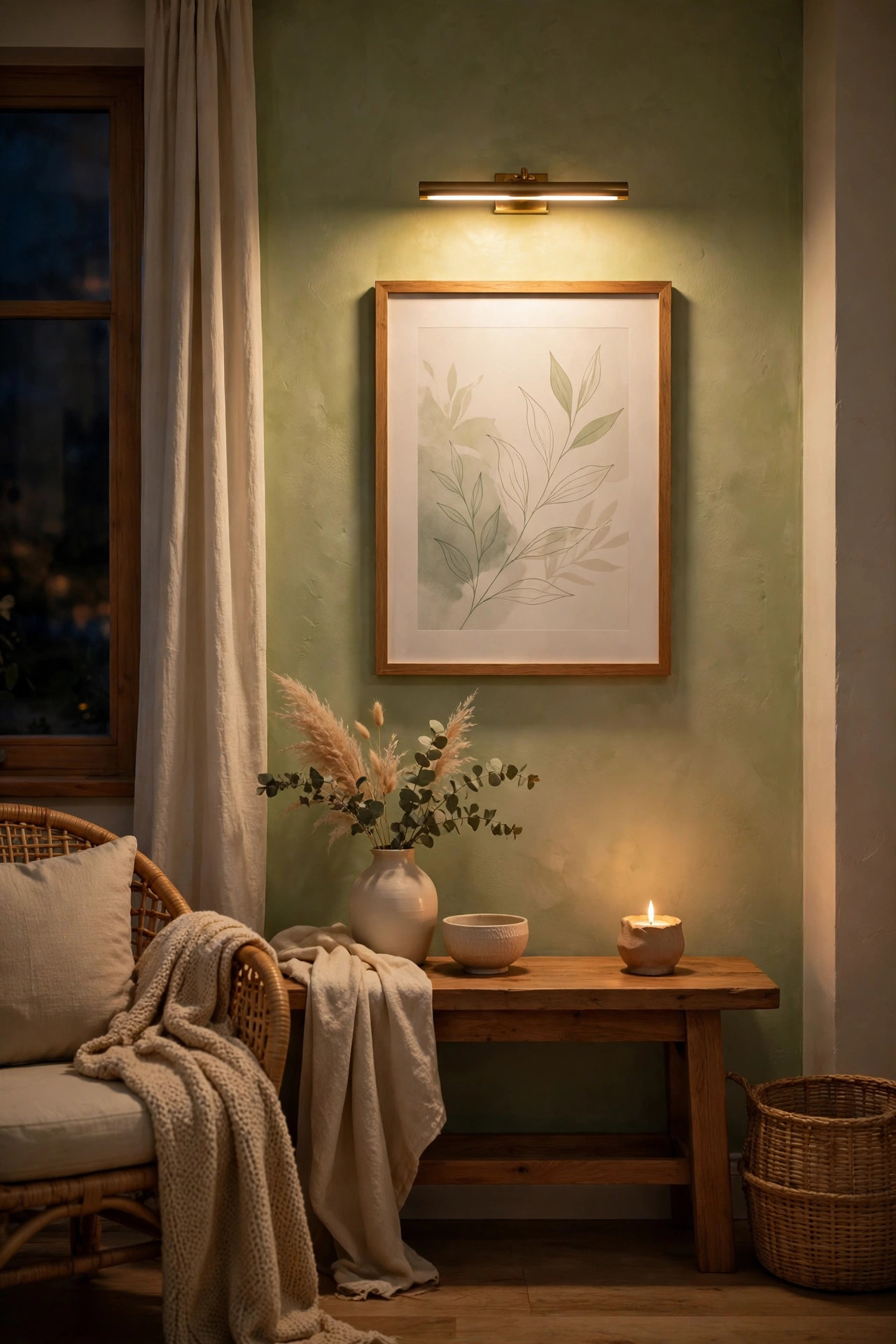
A picture light above a framed print turns ordinary art into a gallery piece after dark.
Mount a slim brass picture light six to eight inches above the top of the frame, and use warm white, 2700K bulbs so the light feels like evening sun rather than office light.
The light should wash down the face of the art, not glare into the room, so check the angle from the sofa before fixing it in place.
One lit piece of art on a wall is enough: two picture lights competing in one room make the wall feel like a museum corridor instead of a living room.
13. Black-and-White Photo Grid
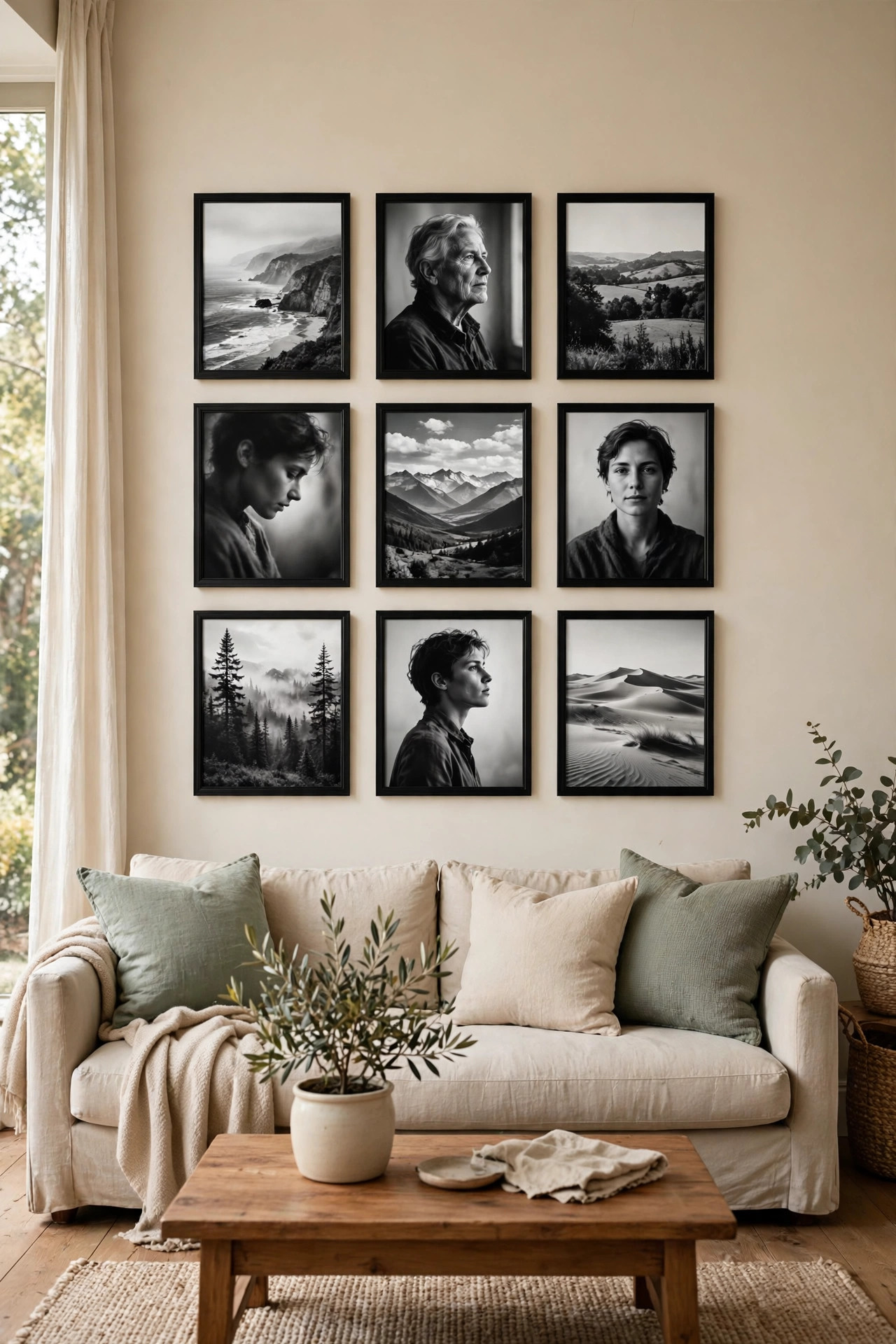
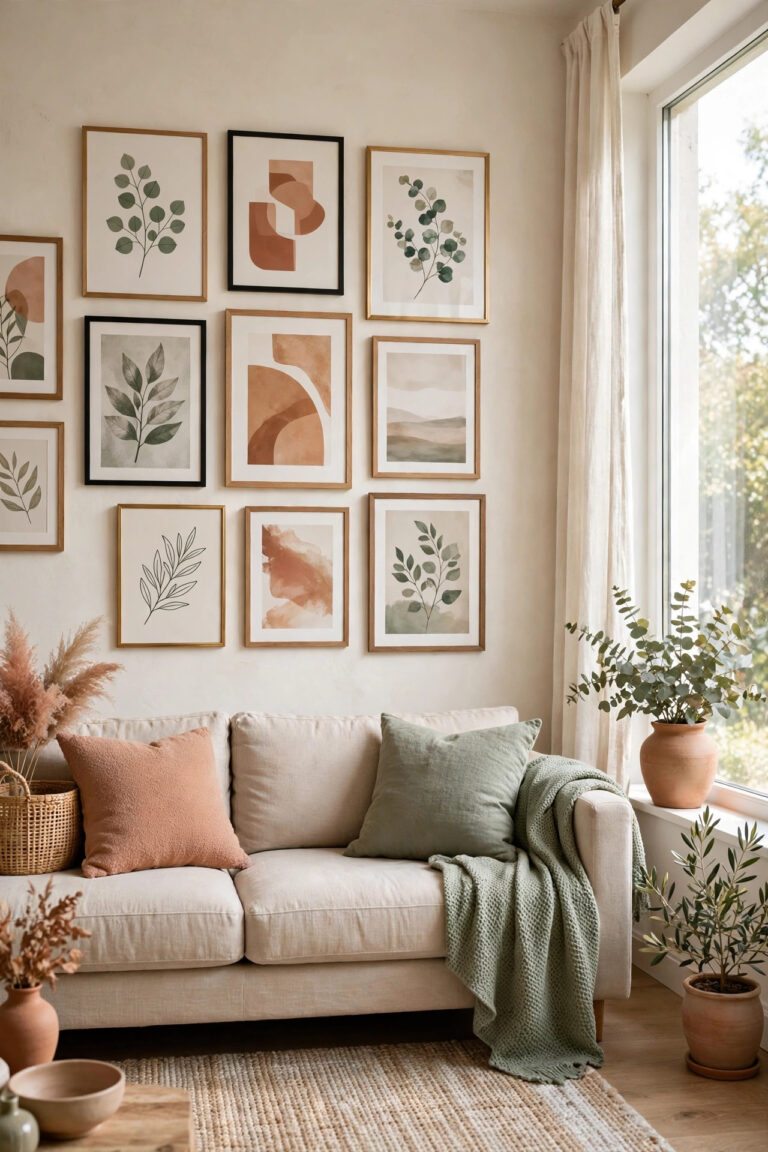
A grid of black-and-white photographs in matching frames is the most forgiving gallery wall there is, because the uniform colour makes even very different photos feel like one family.
Pick one size and one frame, then hang the grid as a single unit with two-inch gaps:
- Nine 8×10 prints in a three-by-three grid
- Six 11×14 prints in a two-by-three grid
Mix portraits, landscapes, and everyday moments rather than only posed photos, since a grid of real life is more interesting than a grid of formal shots.
Center the whole grid above the sofa or on the largest empty wall, and keep the wall around it clear so the grid holds the eye.
14. Oversized Fabric Tapestry Wall
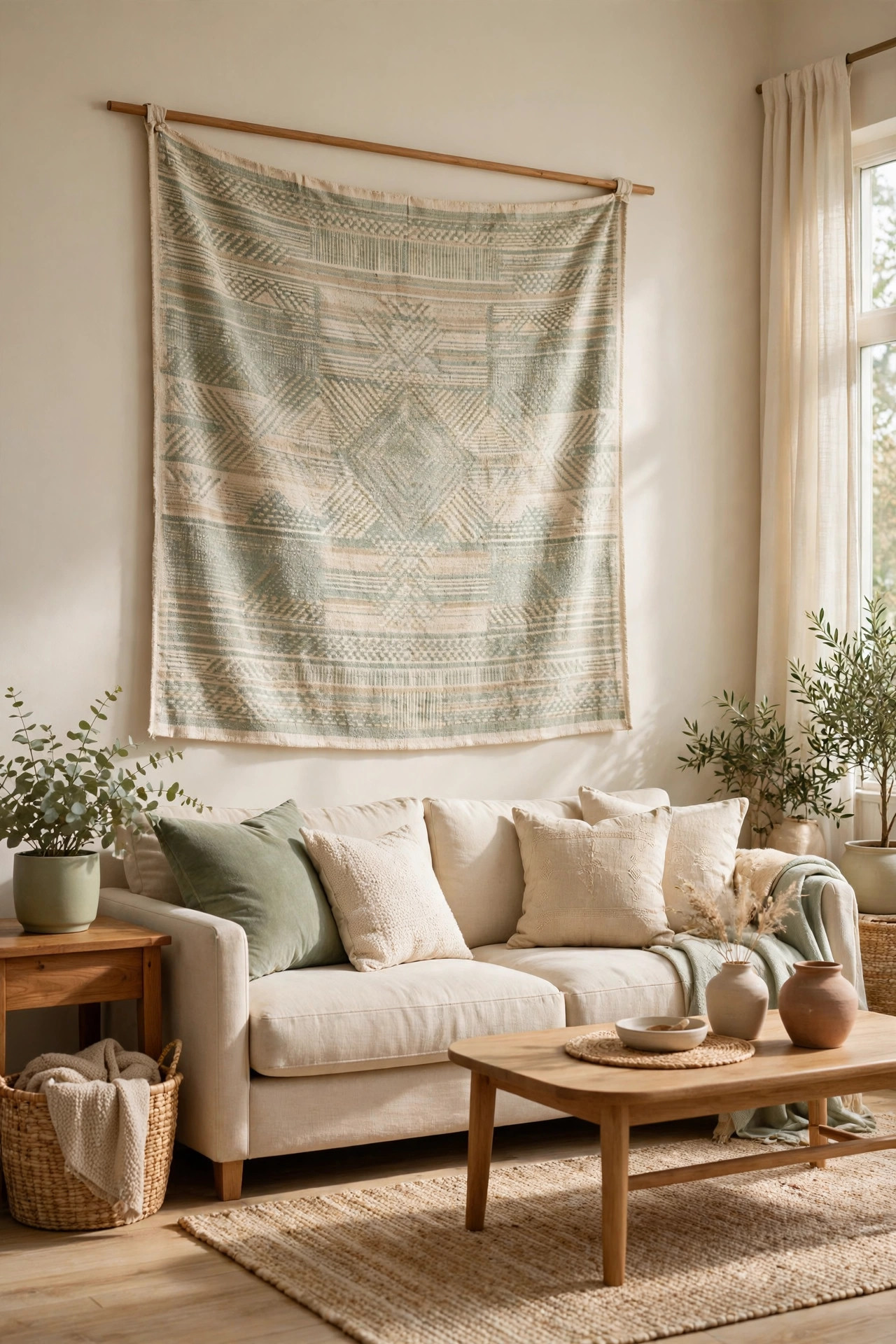
A large fabric tapestry softens a living room wall in a way framed art cannot, and it helps with echo in rooms with hard floors.
Hang it from a slim wooden dowel rod, with the top of the fabric about eye level, and let it fall straight without bunching at the bottom.
Choose a muted pattern in colours already in the room, because a loud tapestry becomes the only thing anyone sees.
This works best on the largest blank wall, where a framed piece would look small and lost, and it comes down in minutes when the room needs a change.
15. Corner Reading Nook Wall
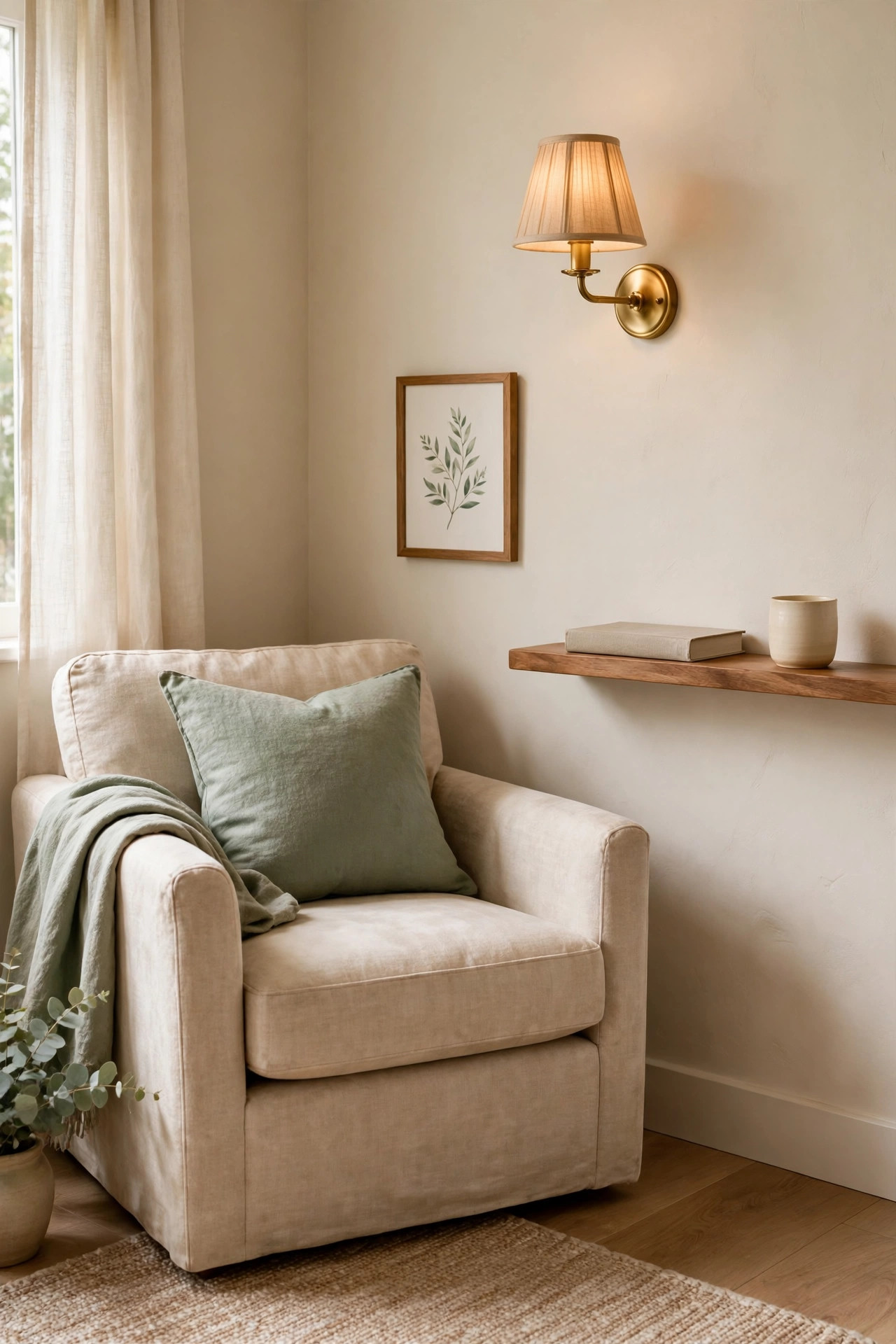
An empty corner becomes the best seat in the house with a chair, a small piece of art, and a wall sconce.
Angle the chair toward the room, hang one small framed print at seated eye level on the wall beside it, and fix a sconce just above shoulder height for reading light.
Add a narrow floating shelf within arm’s reach for a book and a cup, and keep the corner to those four things.
A corner stuffed with furniture stops feeling like a nook and starts feeling like a storage spot, while a simple corner invites someone to sit down.
16. Metal Wall Sculpture Feature
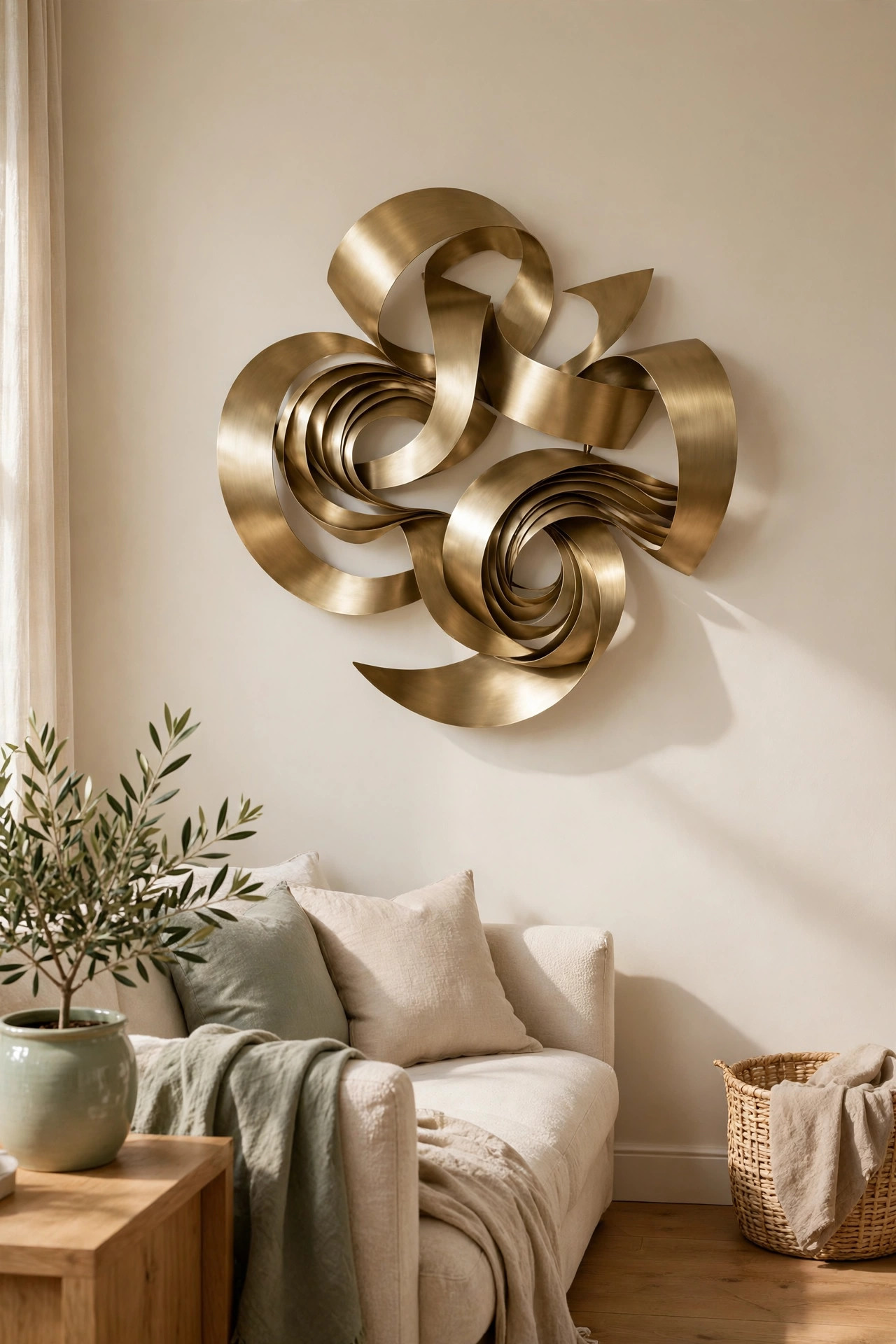
A metal wall sculpture adds dimension to a living room wall that flat art cannot, because it casts soft shadows that shift as the light changes.
Choose one piece at least twenty-four inches wide so it reads clearly from across the room, and hang it on a plain wall with nothing competing beside it.
Brushed brass warms up a cool grey room, while matte black suits a bright white one. One sculpture is the whole statement here, so leave the rest of the wall empty and let the shadows do the decorating.
17. Gallery Wall Around the TV
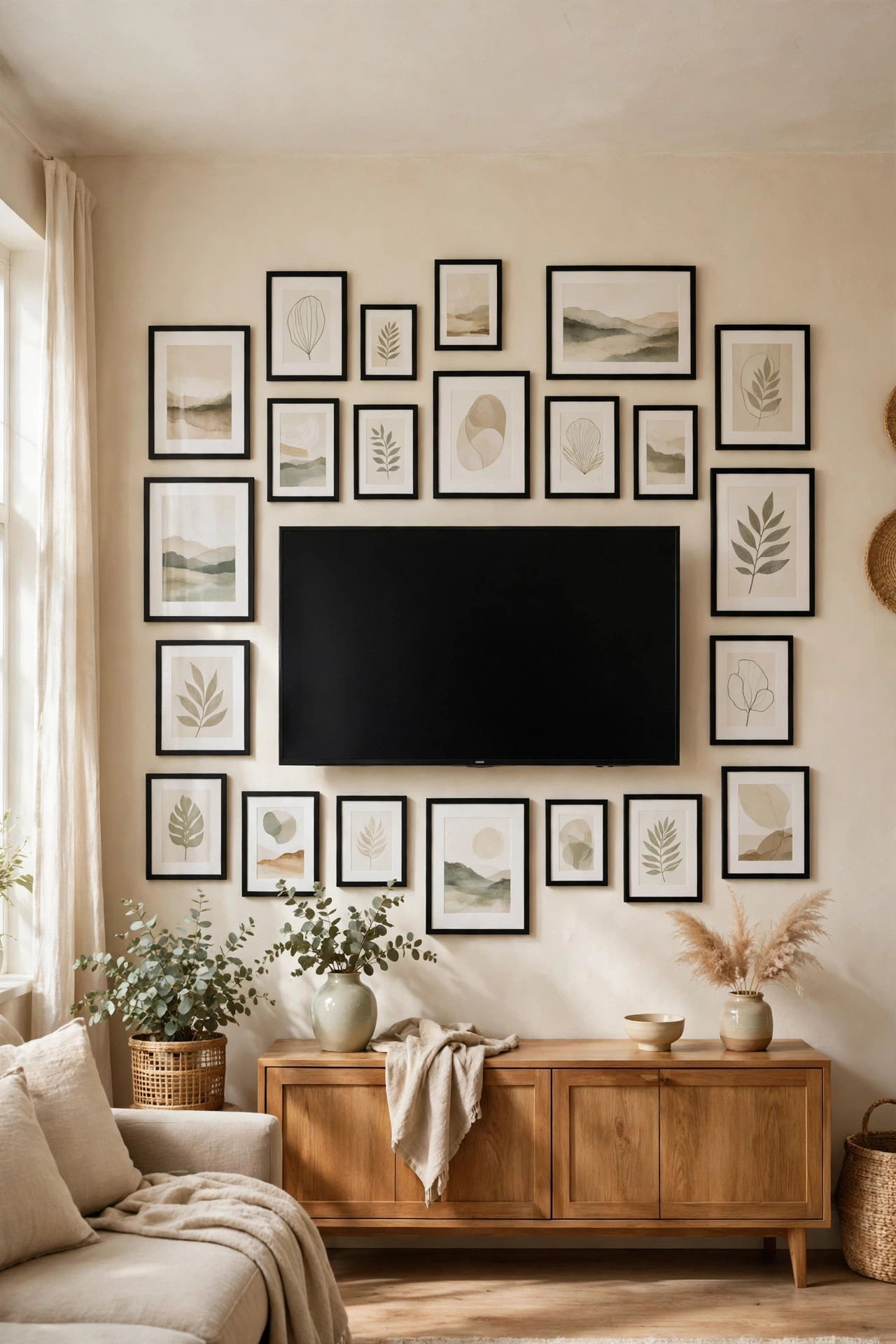
The television can anchor a gallery wall instead of fighting it, if the frames are arranged around the screen as the centerpiece. Start with the TV in the middle, then build outward with frames in one colour family:
- One large frame, 16×20
- Two medium frames, 8×10
- Four small frames, 5×7
Keep two to three inches apart between every frame, and keep the outer edge of the arrangement roughly rectangular so the whole wall reads as one composed picture.
Choose art that is calm in colour, because bright art crowded around a bright screen makes the wall feel noisy even when the TV is off.
18. Woven Basket Wall
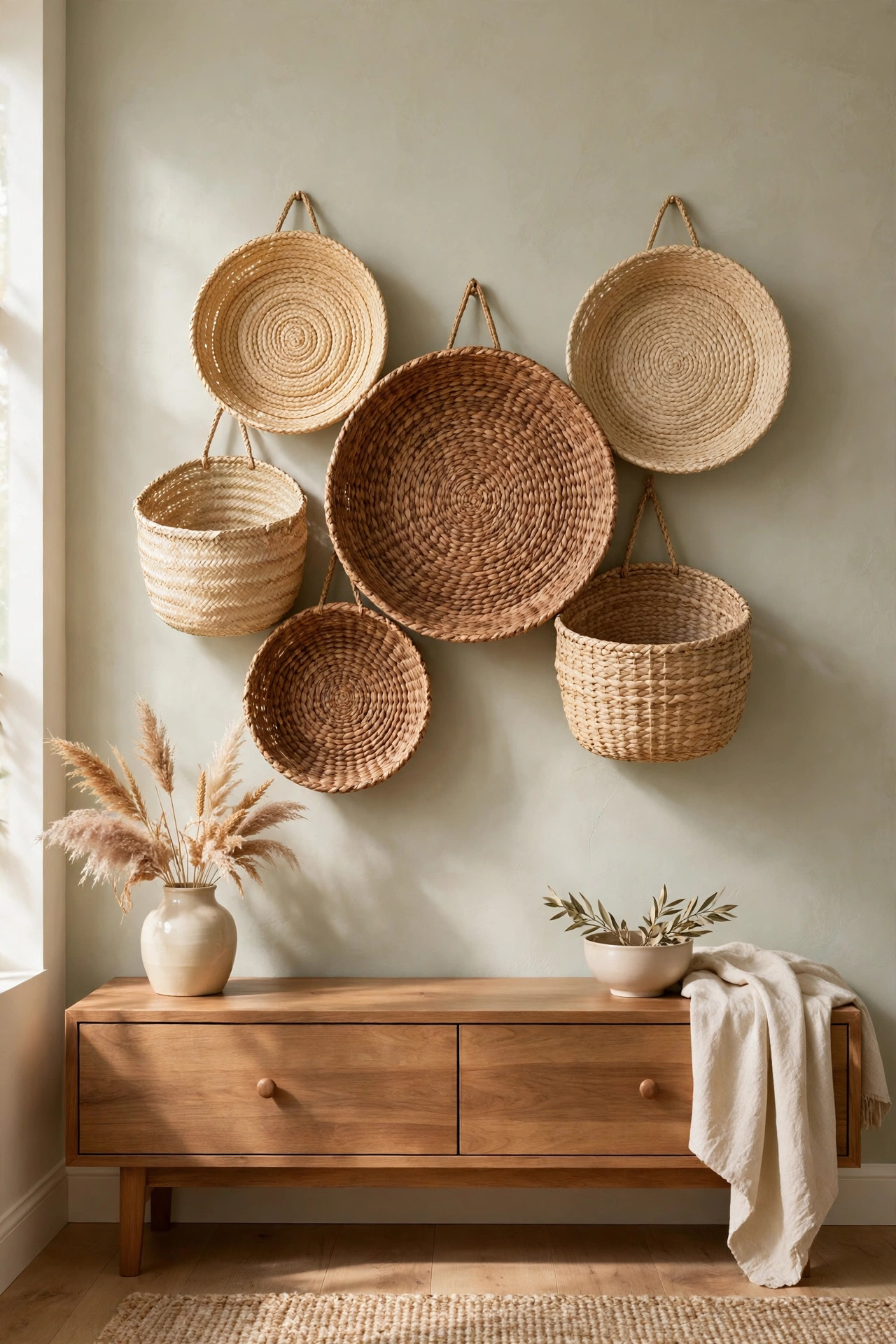
A cluster of woven baskets brings warm, natural texture to a living room wall for very little money. Collect five to seven baskets in different sizes with flat backs, and arrange them with the largest in the center, spacing them two to three inches apart.
Stick to natural tones, straw, seagrass, and warm brown, so the cluster reads as one palette rather than a jumble.
This works beautifully above a console table or on a narrow wall where a framed piece would feel too formal, and it adds the handmade feeling that flat art never quite manages.
19. Landscape Art Series in a Row
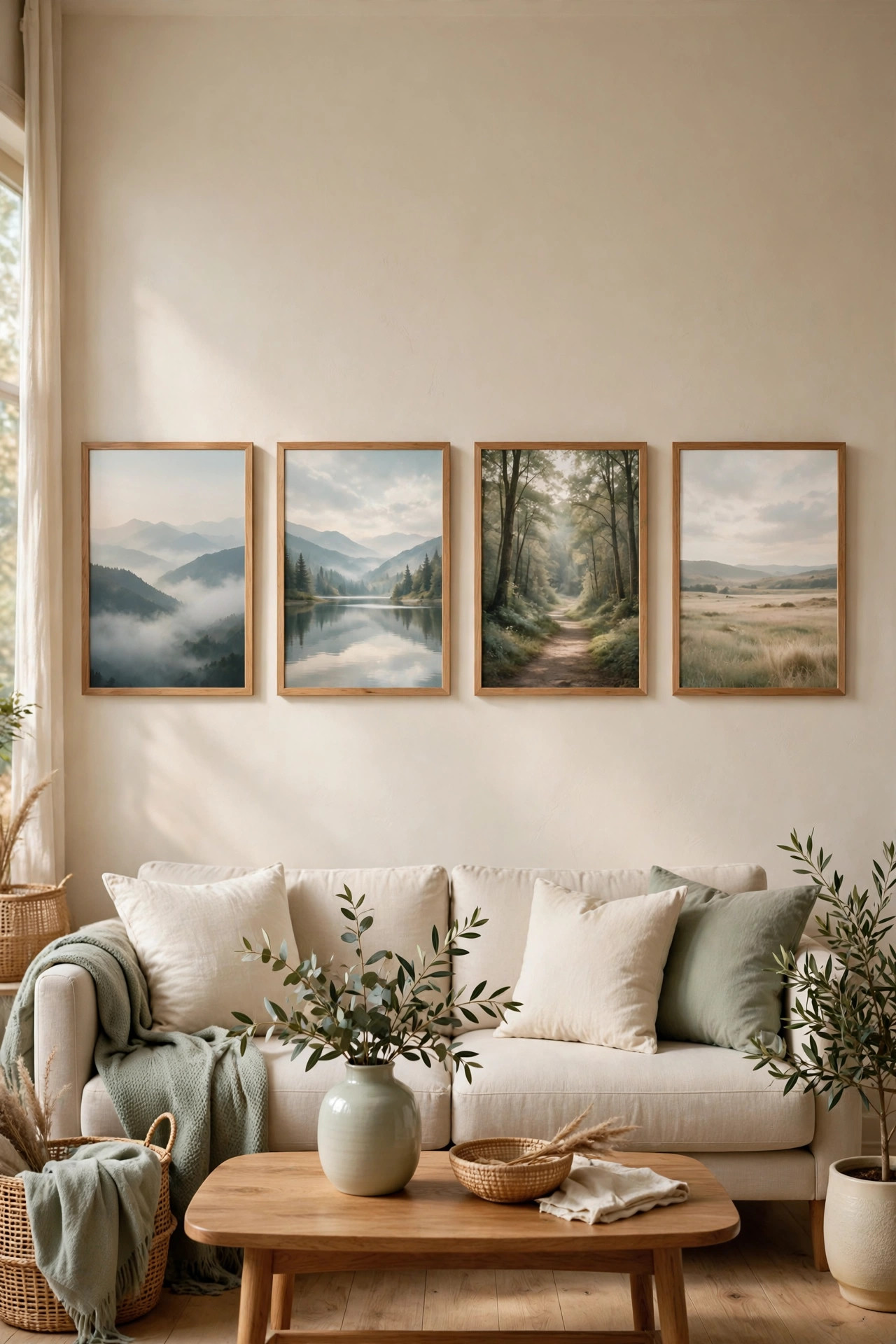
Four matching landscape prints in a row make a long sofa wall feel calm and ordered, because the repetition is soothing to look at.
Choose four prints from one series, in matching frames, and hang them in a level line six to eight inches above the sofa.
Pick scenes that share a palette, for example:
- A misty mountain
- A quiet lake
- A forest path
- An open field
Keep the frames identical and the gaps even, since the whole effect depends on the rhythm. A series with clashing colours or mixed frames falls apart into four random pictures, while a matched set reads as one deliberate piece.
20. Statement Wall Clock Feature
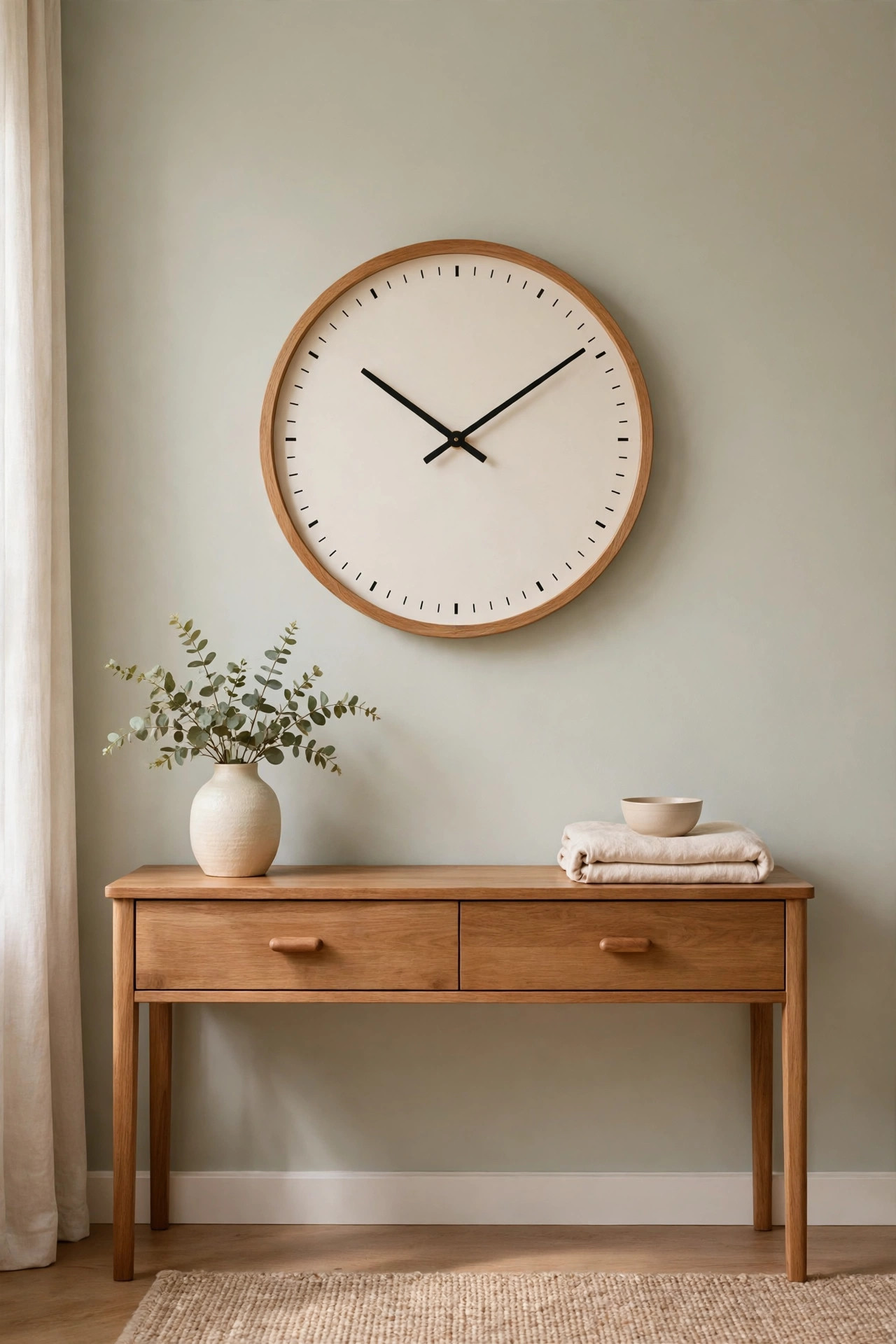
An oversized wall clock fills a living room wall and stays useful at the same time, which is more than most wall decor can claim.
Choose a clock twenty-four to thirty-six inches across, and hang it at eye level above a console table or on the wall opposite the sofa.
Pick a silent mechanism, because a ticking clock in a quiet living room becomes the only sound anyone hears. Pair it with nothing, or with one small shelf underneath, since a clock crowded by other objects loses the clean, confident look that makes it work.
21. Vertical Art Stack on a Tall Narrow Wall
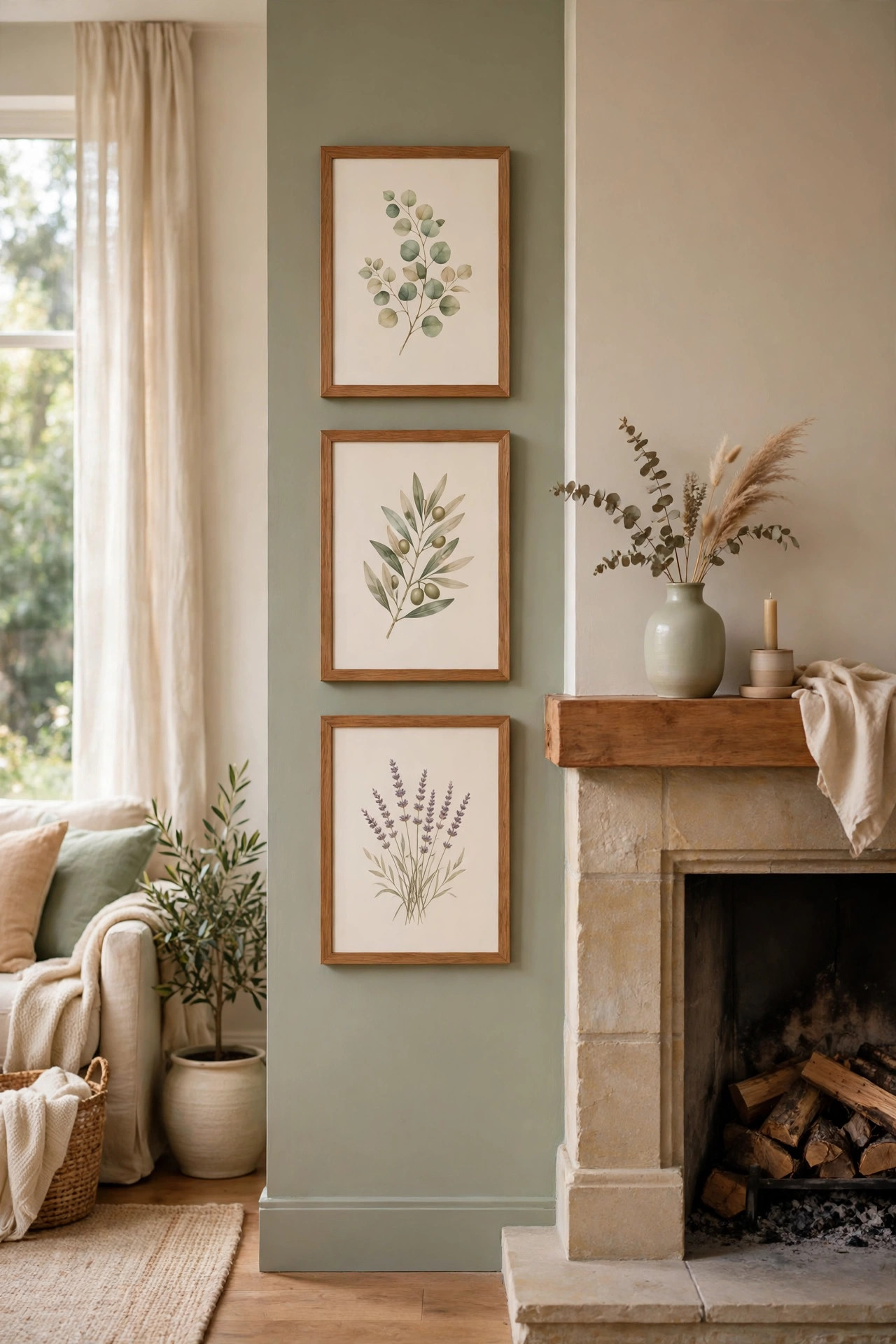
Tall narrow walls beside a fireplace or a television are hard to decorate, and a vertical stack of three frames solves them neatly.
Use three frames of the same width, one above the other, with two to three inches between them, starting the top frame at eye level.
Keep the three pieces related in colour or subject so the stack reads as one column rather than three strangers. This works best with square or portrait-oriented art, because landscape pieces stacked vertically leave awkward empty space on either side.
22. Family Art Display Wall
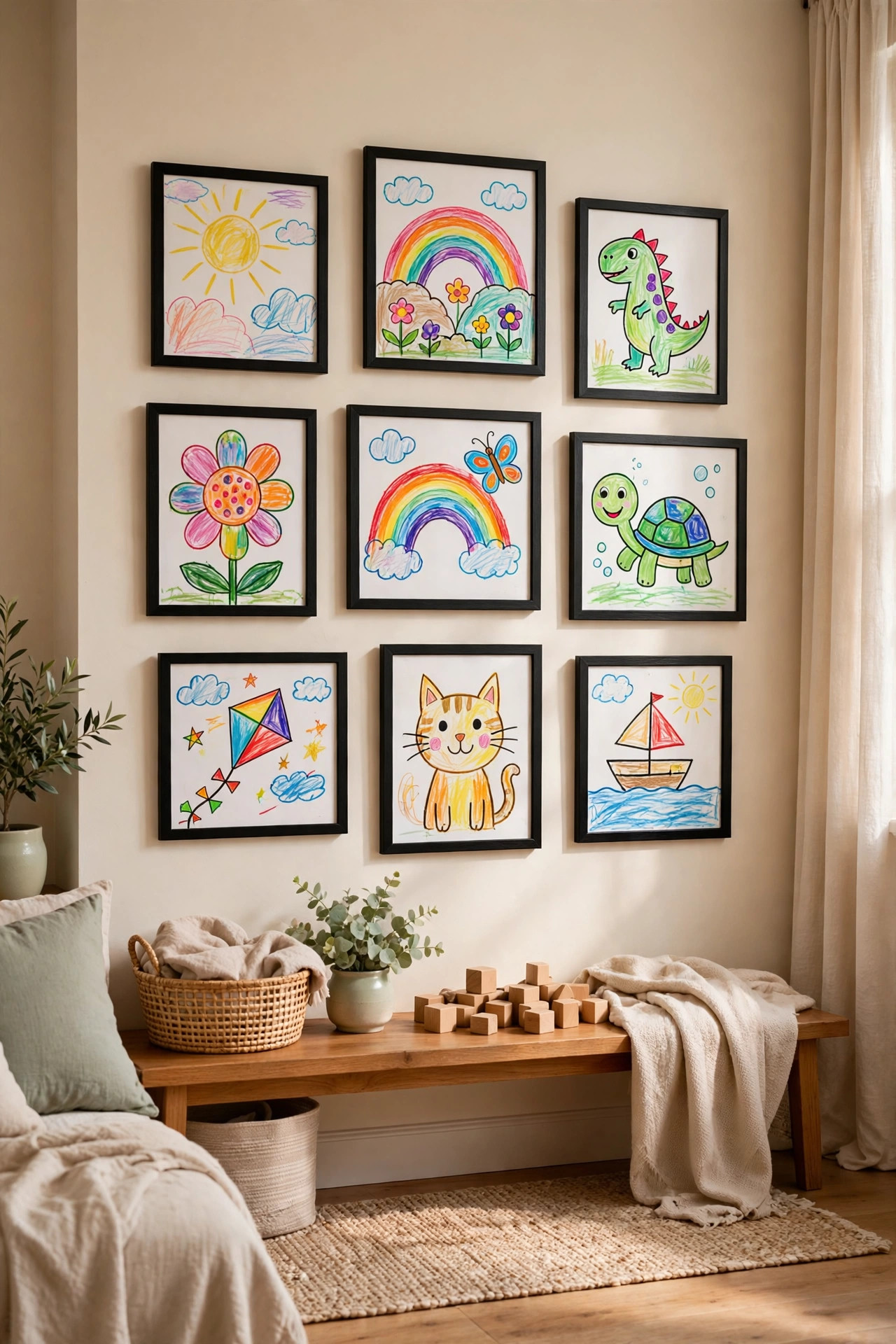
Children’s artwork deserves a wall of its own, and matching frames are what turn a pile of colourful drawings into a display that suits a grown-up living room.
Hang the pieces in a loose grid, all in the same frame colour, and keep the frames consistent:
- Black frames for a modern room
- Natural wood frames for a warm room
- White frames for a bright room
I rotate the pieces every few months, and the wall never looks the same twice, which keeps the children excited about seeing their work on display.
Hang the grid low enough for the children to see their own art, around forty-eight inches to the center, and the wall becomes a family favourite instead of a formal gallery.
23. Shadow Box Memory Wall
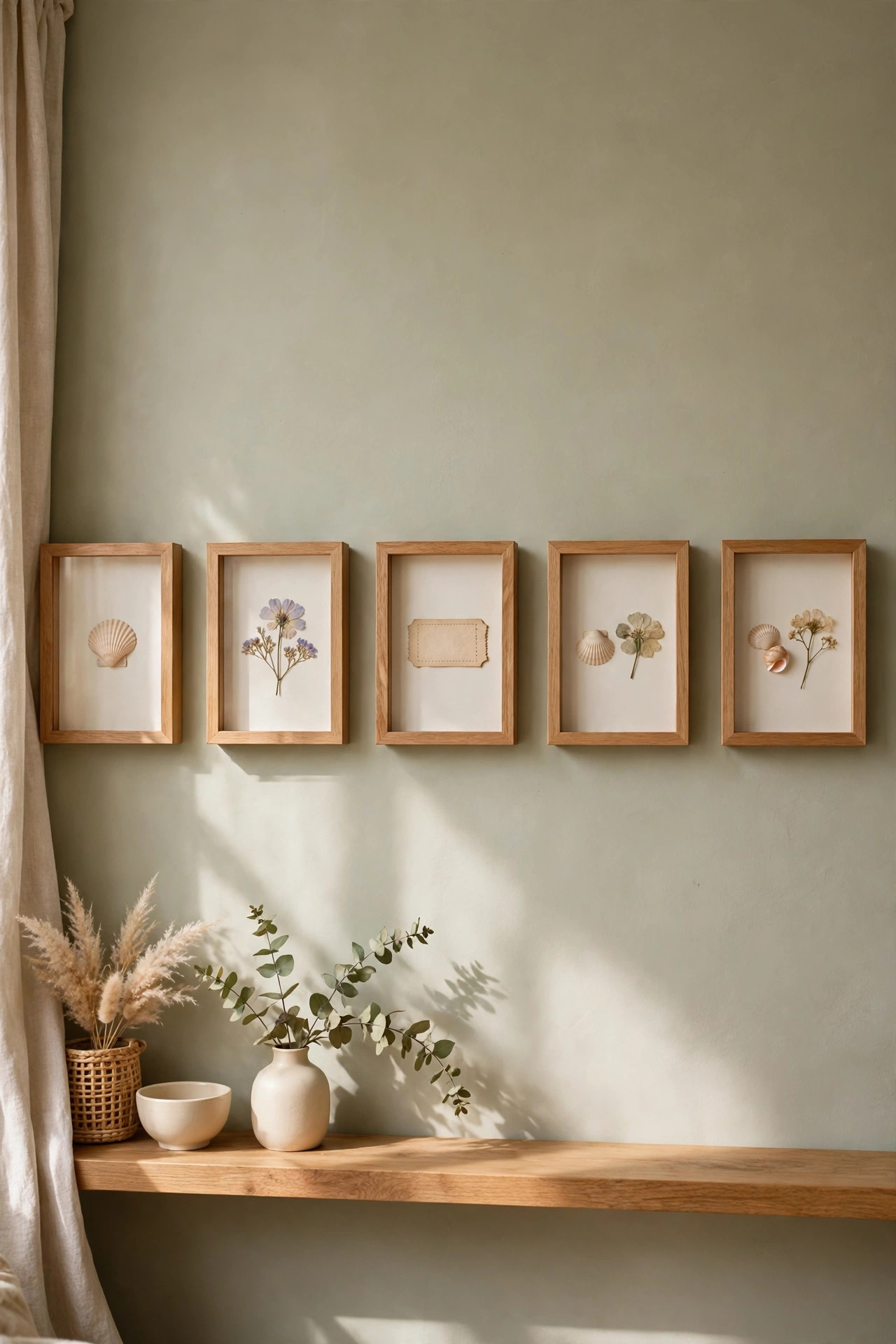
Shadow boxes turn travel souvenirs and small keepsakes into wall art, and they suit a living room far better than a drawer full of forgotten objects.
Hang three to five boxes of the same depth in a row or a loose cluster, each holding one or two objects with space around them.
A ticket stub, a small shell, or a pressed flower means more in a shadow box than it ever did in a bag.
Keep the backgrounds plain and the objects few, because a crowded shadow box reads as clutter, while one object with breathing room reads as a memory worth framing.
24. Dark Moody Accent Wall
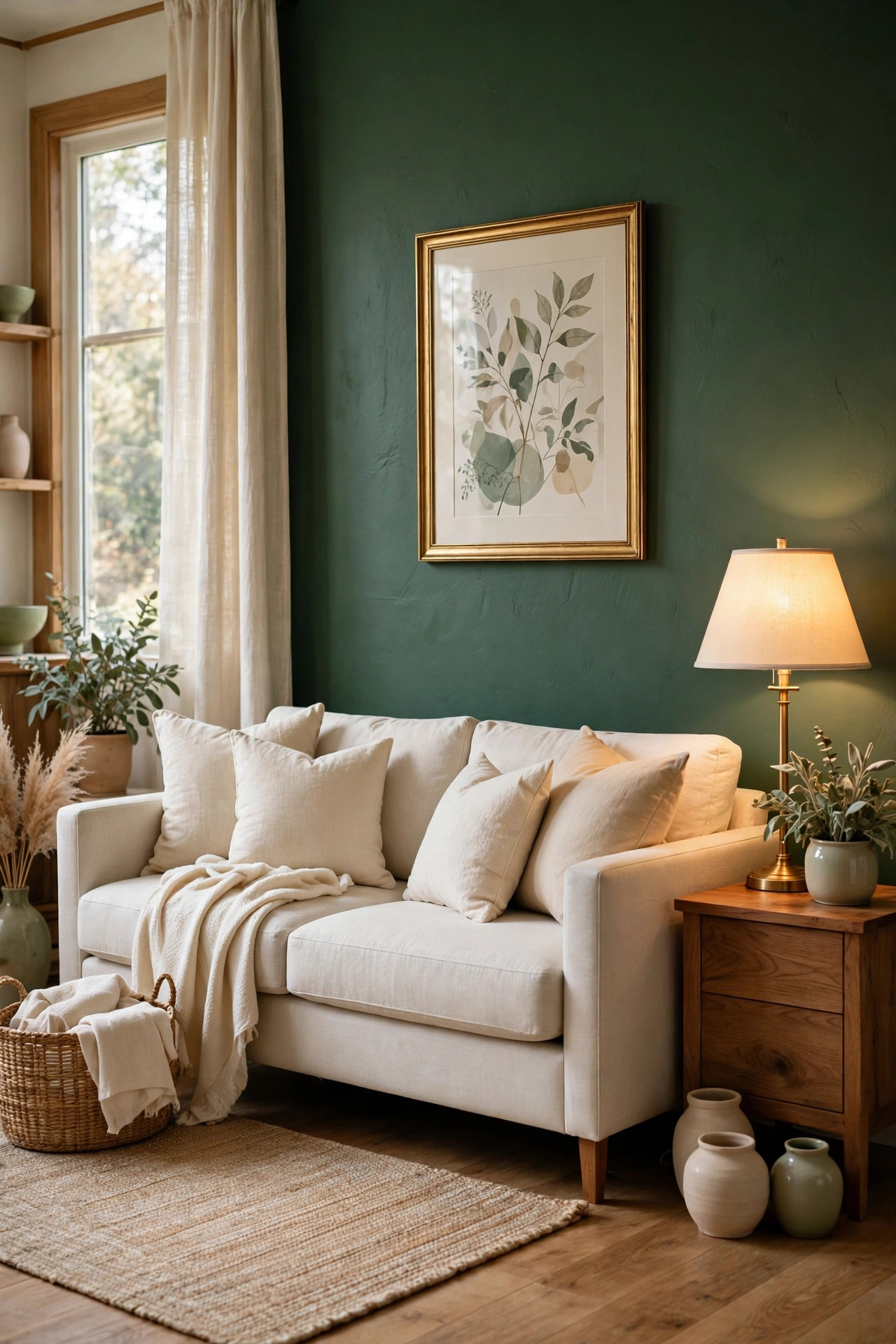
A dark accent wall makes a living room feel cosy and deliberate, and it makes everything hung on it stand out. Paint the sofa wall deep green or navy, then hang brass-framed art on it and keep the sofa itself light.
A dark wall does not shrink a room, it makes the light in it feel warmer.
Balance the dark wall with a simple palette:
- Deep green or navy on the wall
- Brass frames on the art
- Warm cream on the sofa and cushions
Add one warm lamp nearby, because dark walls need warm light to feel inviting rather than gloomy. This works best on a single wall, since painting every wall dark turns a living room into a cave.
25. Art Between Two Windows
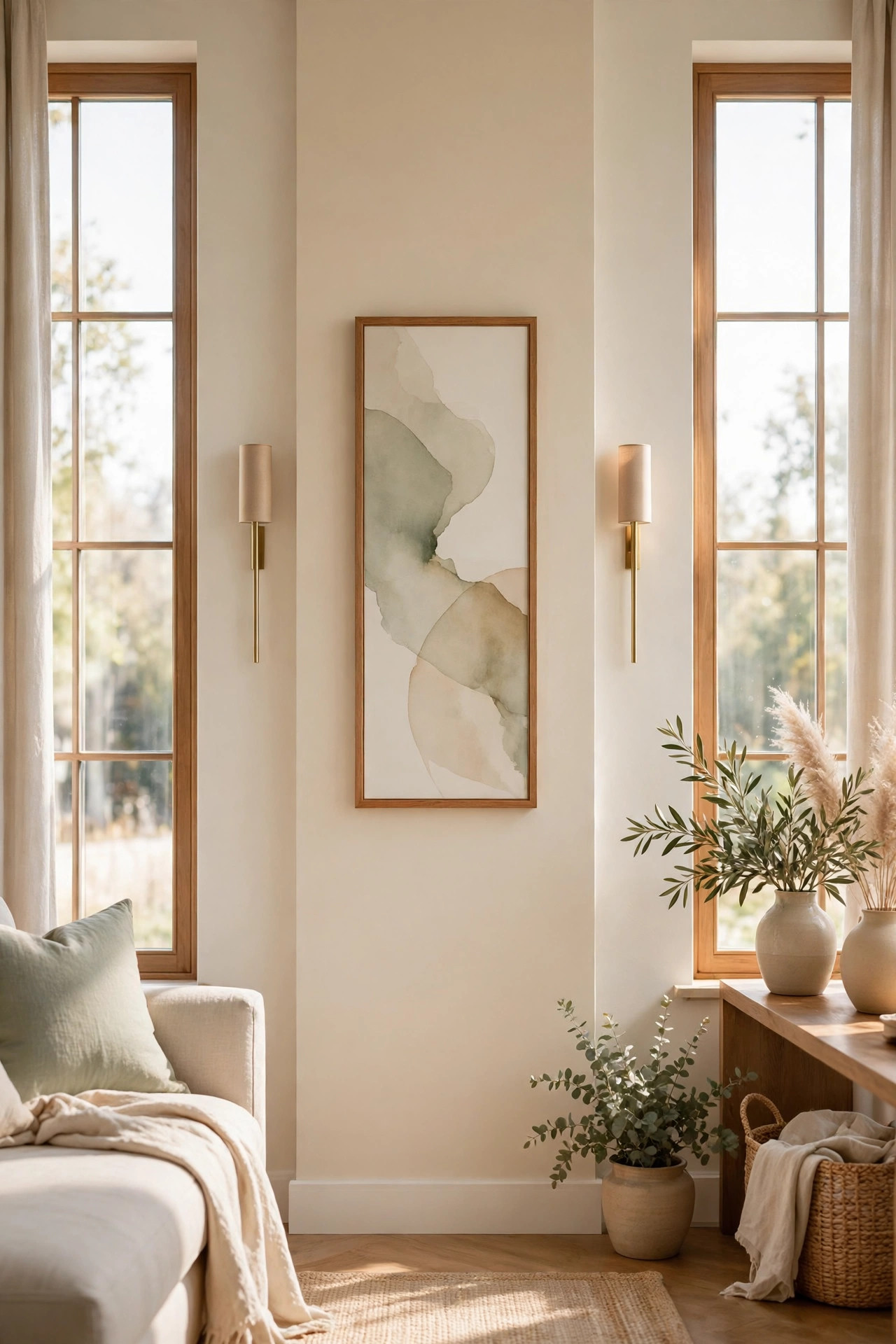
The strip of wall between two windows is often left bare, yet it is one of the best spots for art in a living room.
Hang one tall, narrow piece there, about a third of the width of the gap, with its center at eye level.
Flank it with two slim sconces if the gap allows, and keep the art calm in colour so it does not compete with the daylight coming in on both sides.
This small move makes the whole window wall feel designed, and it costs nothing more than one frame and a nail.
A living room wall does not need everything at once. Start with the wall you look at most, get the height and the spacing right, and let the rest of the room grow around it.
The walls that work best are the ones that feel considered rather than crowded, one piece at a time, until the room finally feels like yours.